
you may remember that last year at clerkenwell design week i took zitozza to the platform venue in the hope to introduce it to london’s design scene. in hindsight, for zitozza, it was not a particularly successful show as due to the festival set-up, visitors needed to know where they were going and brands needed to be wanted to be found by name. so this year, i went into it freely without obligations and decided to explore what’s really happening at other venues. on the tuesday i executed a high-efficiency, no-hotel, low-baggage tactical strike on london, which left me feeling logistically flawless, but conceptually exhausted.
it might be a global burnout i’ve been noticing for a while, but it seems like there is quite a bit of tiredness creeping into the design trade show machine. walking the showrooms at 10:00 am on day one, the energy felt remarkably flat. salespeople looked tired before the footfall had even arrived, venues stood quiet and empty, and the usual cowcross street platform venue didn't even open its doors (presumably they could not fully book it out but if the decision to put the new designer in the charterhouse was deliberate, then it probably worked out for the better as this type of multi-venue, festival type set-up only works if you have a pulling name to your venue which new designers aren’t.) hopefully they did better out of it then.
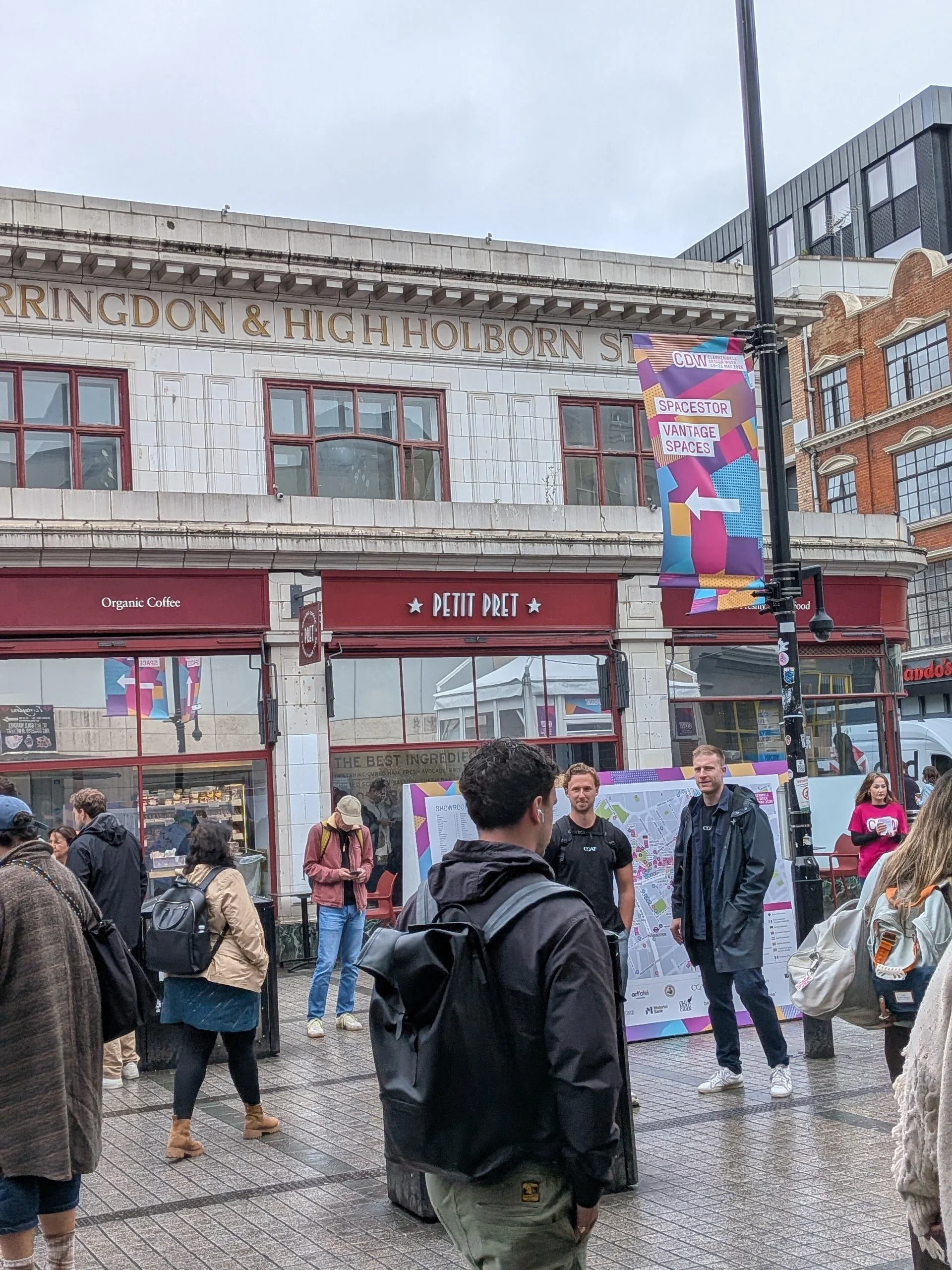
but to me, the industry feels like it is running on the fumes of safe, predictable products, terrified of economic risk and, and entirely lacking in imagination. nowhere was this exhaustion more obvious than in the basic infrastructure of the event itself.
last year, i remember being furious that exhibitors had to pay £300 just to rent a basic barcode scanner for visitor badges. this year, they eliminated physical badges entirely, forcing everyone onto a mobile app so exhibitors had to awkwardly ask their potential leads to be scanned, perhaps this lead to higher quality leads but also felt like a point of friction has been introduced.
the festival app also had a map which showed where the venues were located but didn't show street names with it. as someone not massively familiar with the EC1 layout, i spent the day relying on google and a folded piece of paper (thank goodness for the printed map they still handed out at the corners) which functioned perfectly because it respected basic graphic logic.
we are constantly told that digital integration streamlines human experience but in reality, when digital tools are designed for data harvesting rather than spatial navigation, they simply introduce friction and become annoying obstacles. this theme of passive, compromised design carried straight onto the panel stages.
i went to an exciting talk on the future of museums and the new cultural landscape by zaha hadid architects and erco lighting, where the architects on stage argued that modern museum spaces have become an important third space, meaning not home, or work, but somewhere else to be and socialise. the southbank centre was cited as a great example of a “creative hub” that “you don’t even need to check what’s on” for, you just go there to “hang out”, trusting there’ll be programs you might enjoy and it was debated as a model to be exported to other institutions.
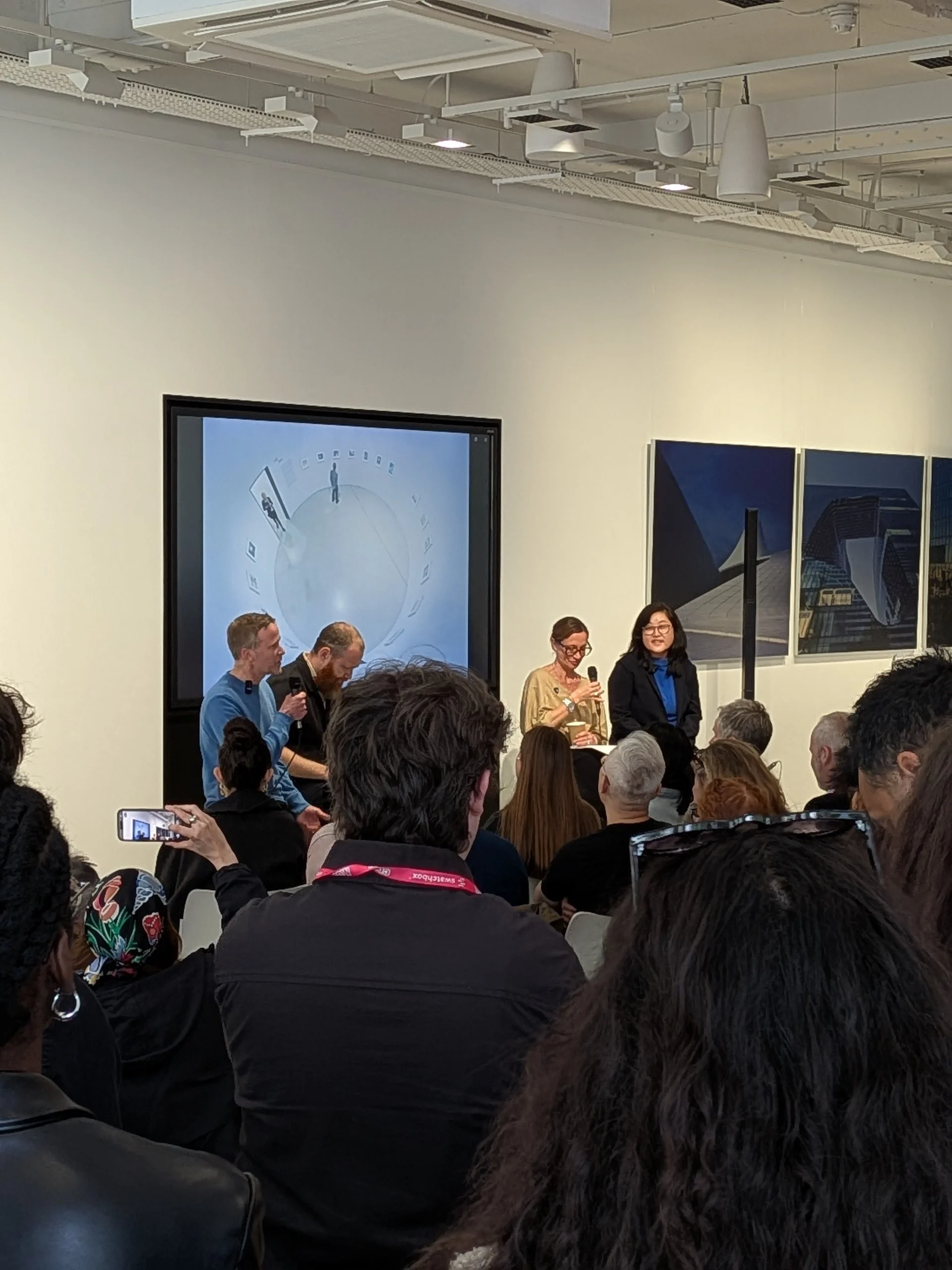
being involved in the v&a dundee’s learning programme, i have observed as much but i was a little gobsmacked to hear this take from architects themselves as something to celebrate, because i view the role of architecture (and the cultural institutions housed by them) as something that should lead, rather than follow. i think we should be able to expect from these multi million pound projects to not just follow and adapt to our behavioural changes but actually lead. it is design’s job to, erm, design for better engagement. when institutions design exclusively for passive consumption, turning a museum into a glorified lounge or a public mall where people sit without engaging much with the intellectual substance of the building, they surrender their cultural authority. i don’t think we need more spaces designed for passive lingering; we need frameworks that actively invite intellectual engagement. design should not be a reactive service that mirrors lazy social habits; it should be a proactive catalyst that elevates human curiosity.
i would have loved to have stayed and listen to the questions and perhaps ask about this one but it veered off about the use of AI and i had to rush to attend another one.
on the following talk about wall coverings with ARTE and house of black design i kept hearing similarly challengeable ideas. one of the industry trends seems to be a new found appreciation of hand crafted surfaces (a huge win and hope for zitozza) however the reason for this is simply because it “tells a story” and when asked how to prevent a pattern from becoming dated over time, the answer given was to ignore trends and "design for emotions, because emotions are permanent."
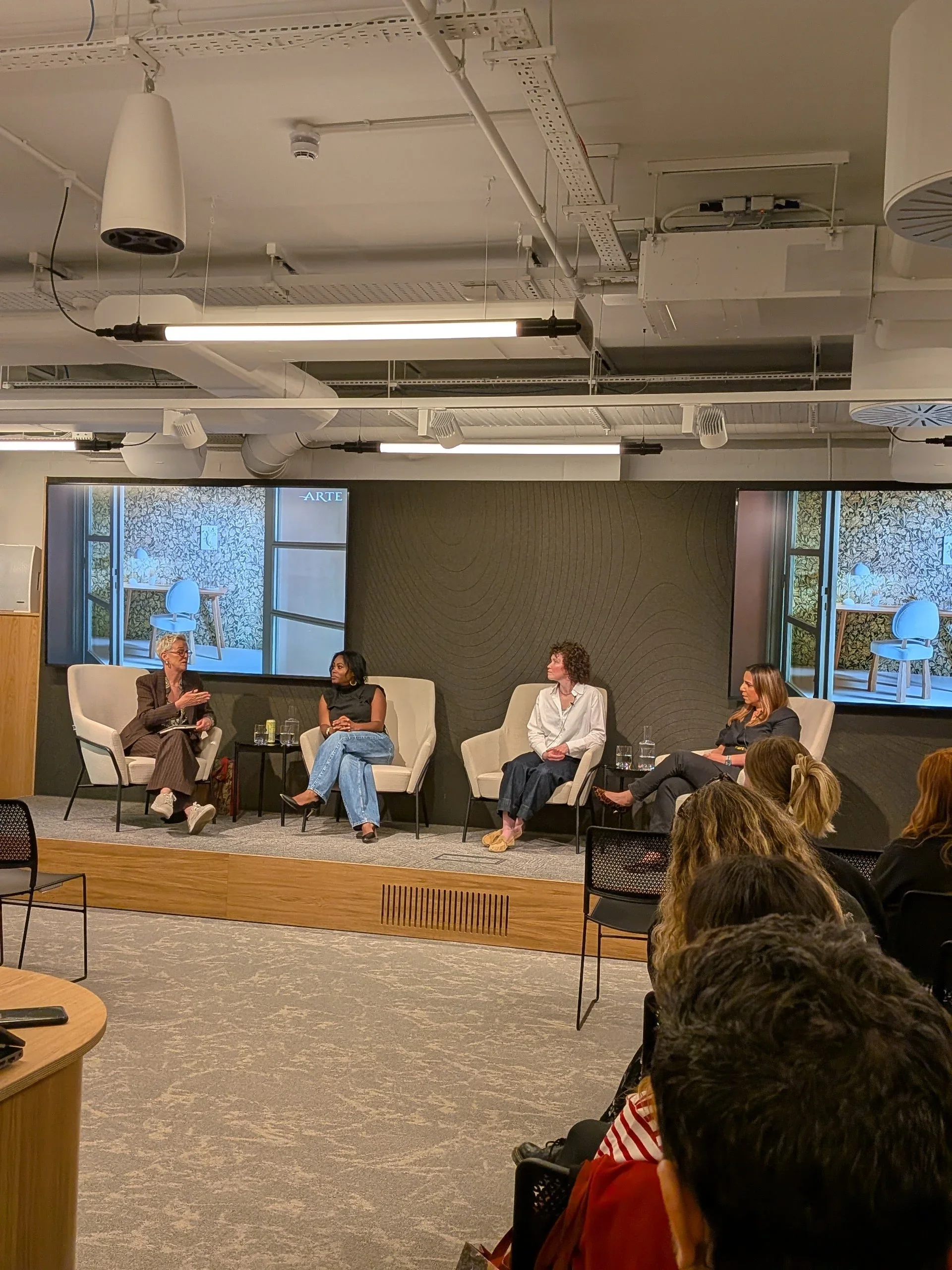
i could not disagree more, in my view, emotions are the least permanent thing we possess; they are volatile, seasonal, and easily manipulated by marketing campaigns. a space designed around a fleeting emotional narrative is guaranteed to date the moment that emotion shifts. true aesthetic durability does not come from forcing a story onto a wall or a floor; it comes from rhythm, proportion, and structural logic. a grid remains honest long after the emotions shift or a narrative becomes told and tiresome.
i found this point ironic to listen to after i met a representative from the dresdner zimmer design collective, and we discussed the systemic struggle of the modern studio: the reality that today's market has completely lost its understanding of material value. when consumer culture conditions people to expect a chair to cost £50 (the price of a flatpack factory unit) the immense structural value of a handmade, material-first object becomes invisible and despite it having the “storytelling” power, it becomes significantly harder to market it and find the buying power for it. it remains to be seen whether this is a struggle we can overcome but i wholeheartedly support the idea of smaller studios grouping together and gaining support of the national chamber of commerce to promote their craft at design festival.
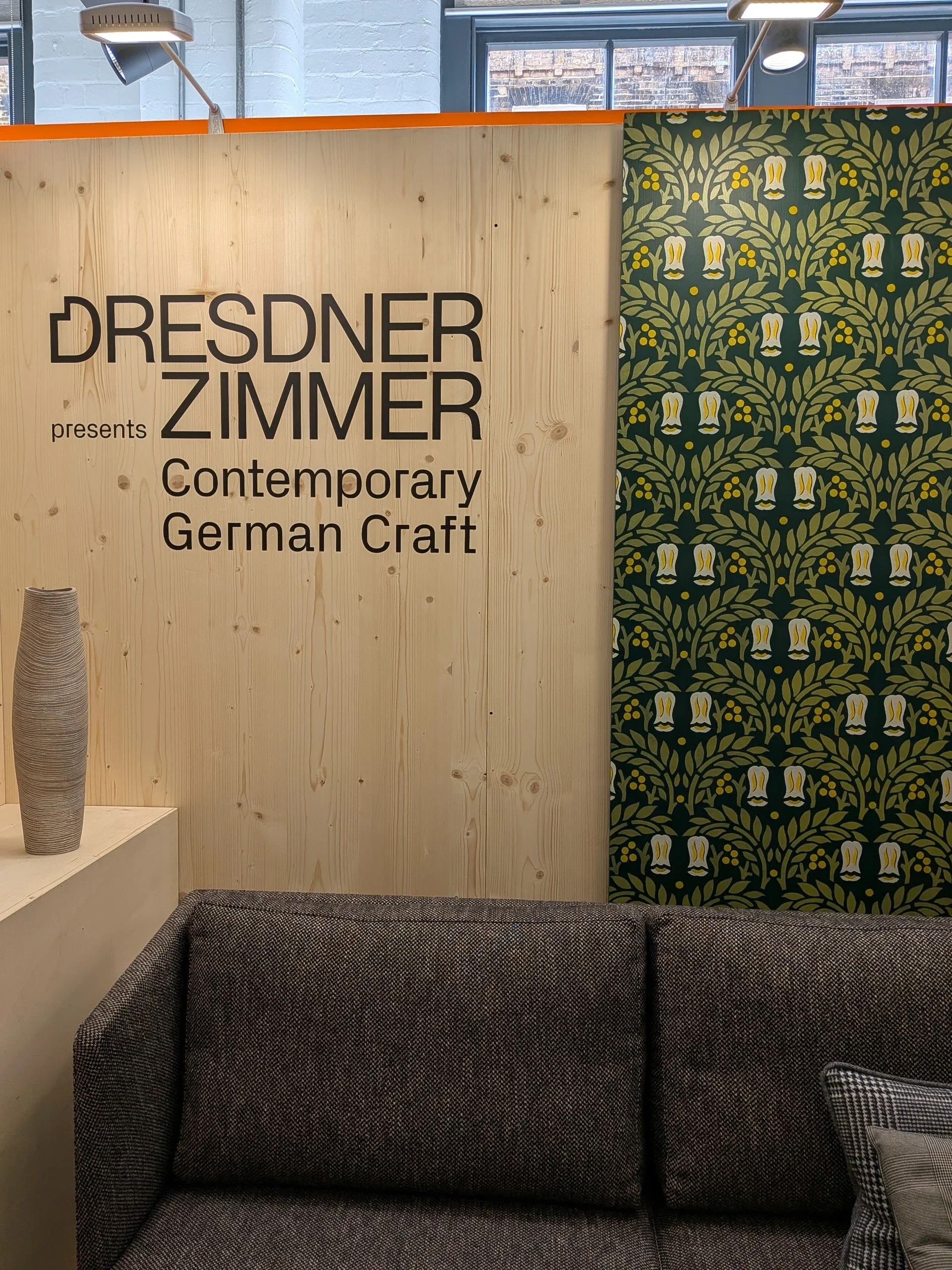
i was really rooting for the german pavilion to get busier over the course of the festival, but maybe their mistake was that they thought they came for a trade show and not to offer free food. jane’s london identifies the root cause of the empty venues being simply the other showrooms offering free pizza and prosecco. if that is true, i find it hilarious that even showrooms have essentially become their own version of a "third space" to “hang out” rather than work and do trade. when a design week turns into a big, corporate jolly, the products and innovations become entirely incidental.
ironically, while this was happening, the most tangible win of my detour happened because of the exact opposite philosophy. in the charterhouse (where new designers were packed into now), i crossed paths with a freeweaver studios, who are currently collaborating on a project with the v&a dundee where i work as a freelance design educator and it was a stark reminder of what real cultural leadership looks like. at the v&a dundee, the learning programmes don't sit back and wait for people to passively "hang out" in the foyer. the institution actively takes the lead, deploying design education directly into the community, bringing the structural logic of making closer to people. it is an active framework for curiosity, not a passive room to consume a coffee in. it treats the audience as active participants in design and thinking, rather than passive consumers of a pre-packaged narrative.
designing for use, whether it is a museum learning programme, an information map, or a modular textile system, requires a certain level of modest self-confidence. it means creating a clean, honest, highly functional grid and then stepping out of the way so that human engagement can actually happen.
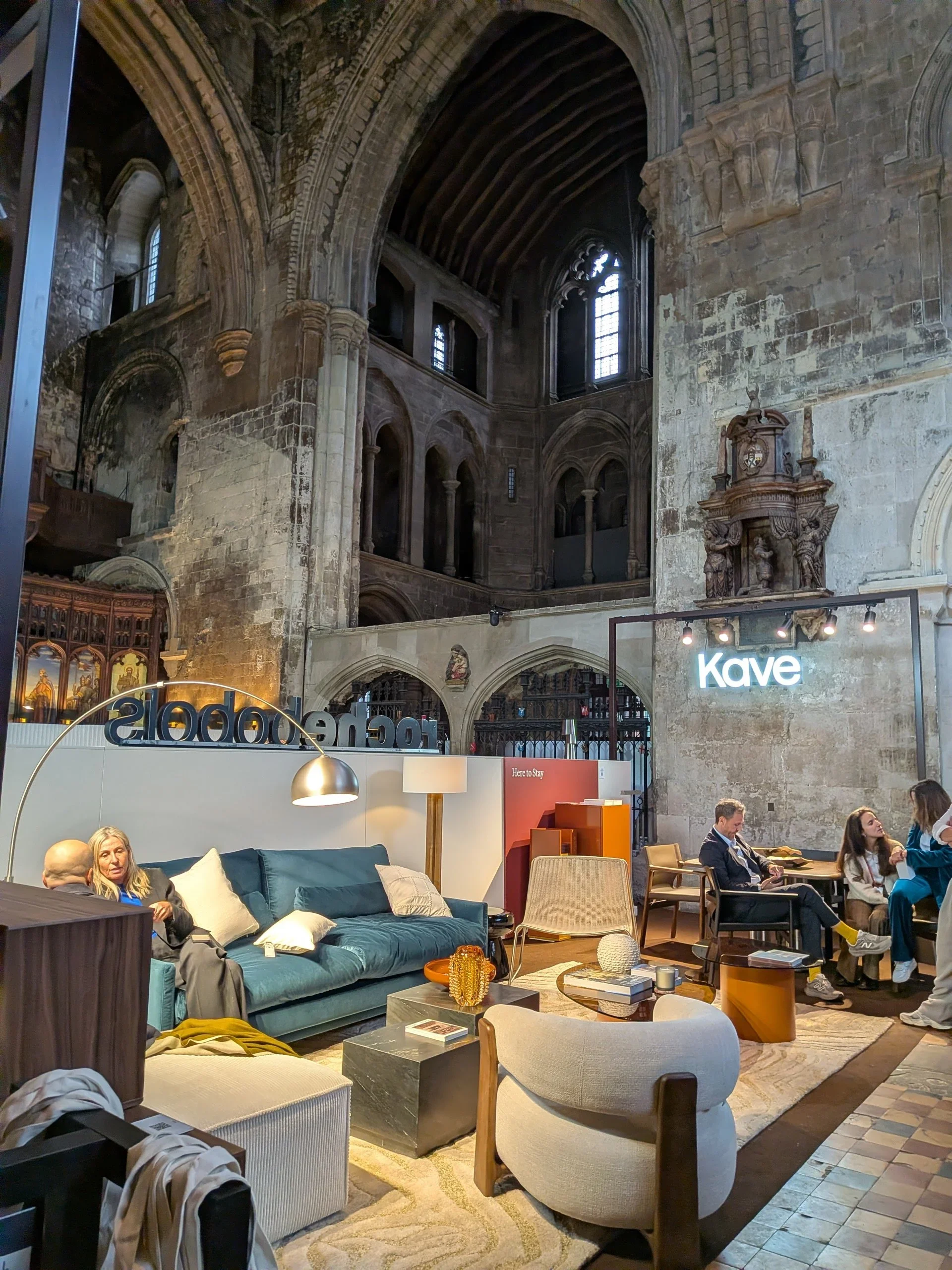
the contemporary design scene in the capital feels tired because it has forgotten how to build those frameworks. it is too busy trying to sell an emotion (with free canapes) or program an app to notice that the people on the street just need to know the name of the road they are standing on.
i have come to the conclusion that if the industry wants to reverse its current stagnation, it must stop looking to corporate trade shows and commercial marketing panels for answers. the industry is running on empty clichés and broken digital tools. real inspiration seemingly isn't happening on the exhausted showroom floors; it is being formed in regional education hubs where people are invited to look at the world through the honest, un-decorated logic of the grid.
london was a necessary reminder: design happens for use, for education, and for structural clarity. the rest is just noise.