
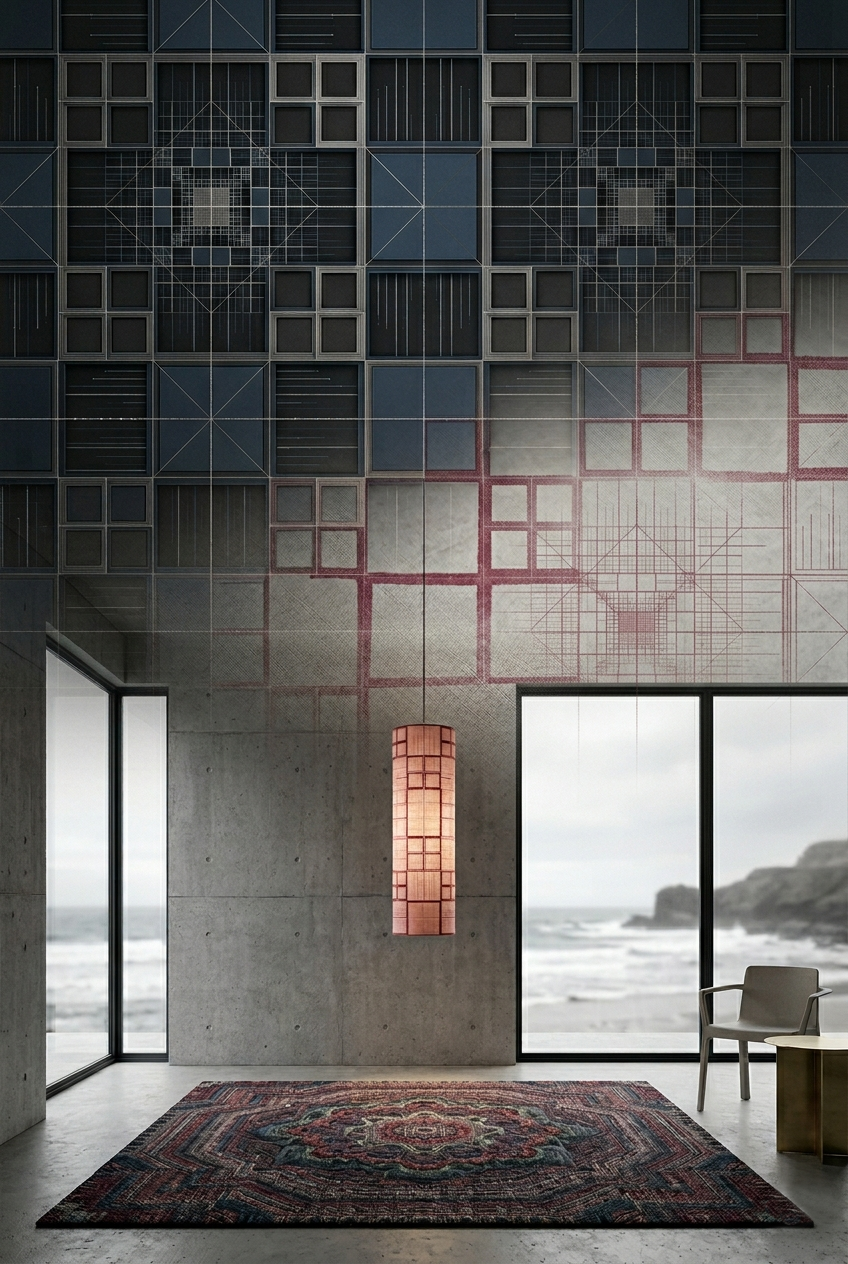
the last month has been quite a reflective time as i have been busy with a new portfolio website (for all the projects outside zitozza - yes they do exist!) and going through all this work has brought up some memories i thought zitozza readers could be interested in too. in early 2018, i found myself deep in the design project of an astonishingly expensive luxury hotel in the gulf. i was hired for this prestigious project at marcel wanders, tasked with creating a modern take on the mathematically rigorous, geometric patterns of middle eastern tradition.
to achieve the most spectacular details, we weren't hand drawing; we were employing computers to do the generating. the 3D designers used the mandelbulb software to program and create incredible fractals - infinitely complex, computer-generated patterns that no human hand could plot alone. the role of our graphics team was to translate that digital infinity into the real world. we spent months and months of tracing them to translate them to material realities, negotiating with suppliers, navigating this delicate field of "digital craftsmanship" and selecting hundreds of colours for pom sets to turn a a screen's output into a tactile carpet.
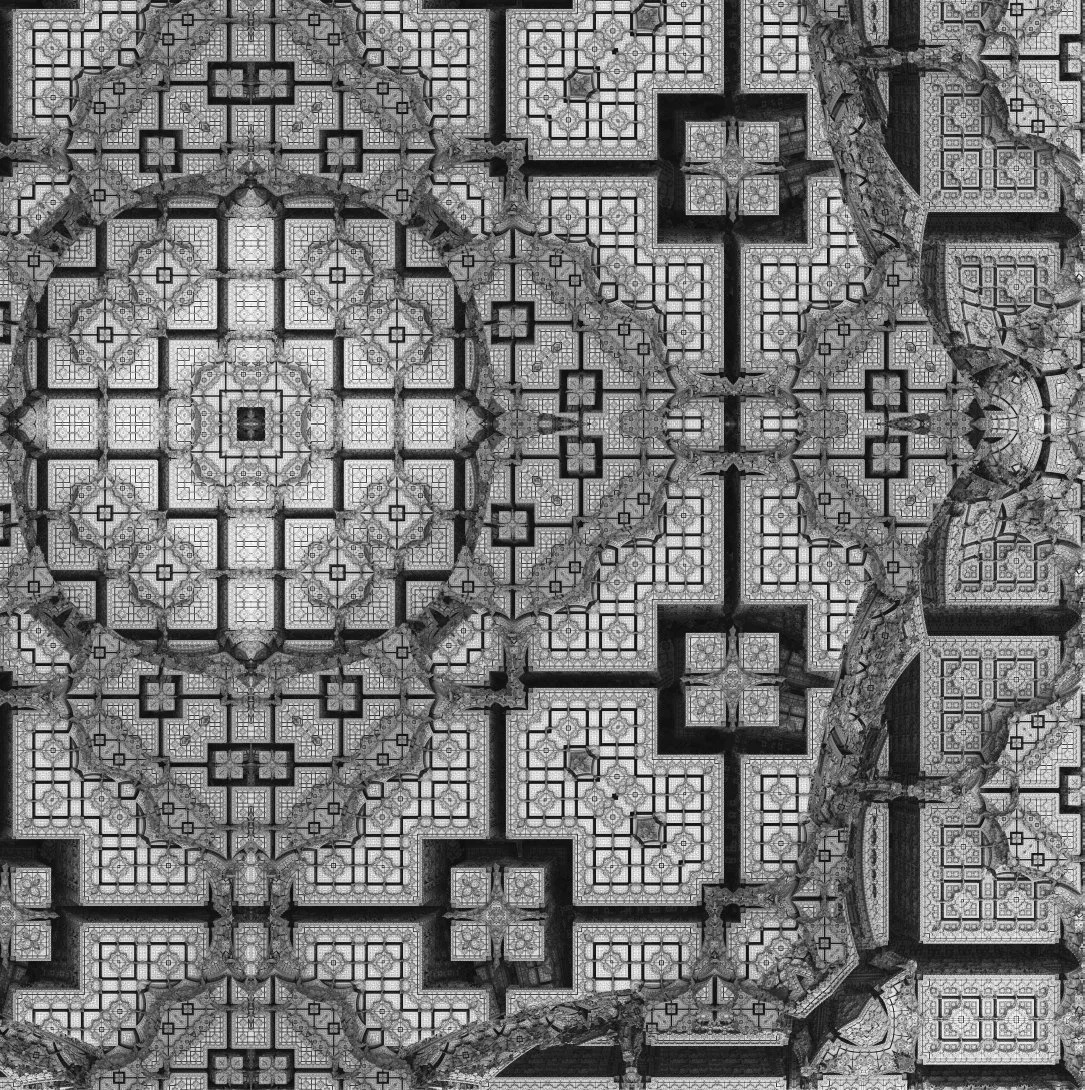
mandelbulb generated fractal detail
interestingly, at the time, AI as we know it now was years away, it was perhaps being talked about as a niche interest but definitely not capable of creating what it can do today. yet, working like this, even then, the writing was on the wall: the traditional relationship between human and machine was reversing.
historically, the human did the "creative" drawing and the machine did the repetitive "analogue" manufacturing. today, that is flipping. the computer is becoming the primary generator of complex form, leaving the human to do the heavy, tactile, and time-consuming labour of physical execution. i found it ironic at the time that the “fun”, creative bits of creating the vision is what we outsourced even all those years ago, while the painstaking material bits were relying on the human expertise. this might not be the future we wanted but with generative AI entering the conversation, it certainly has become what we got.
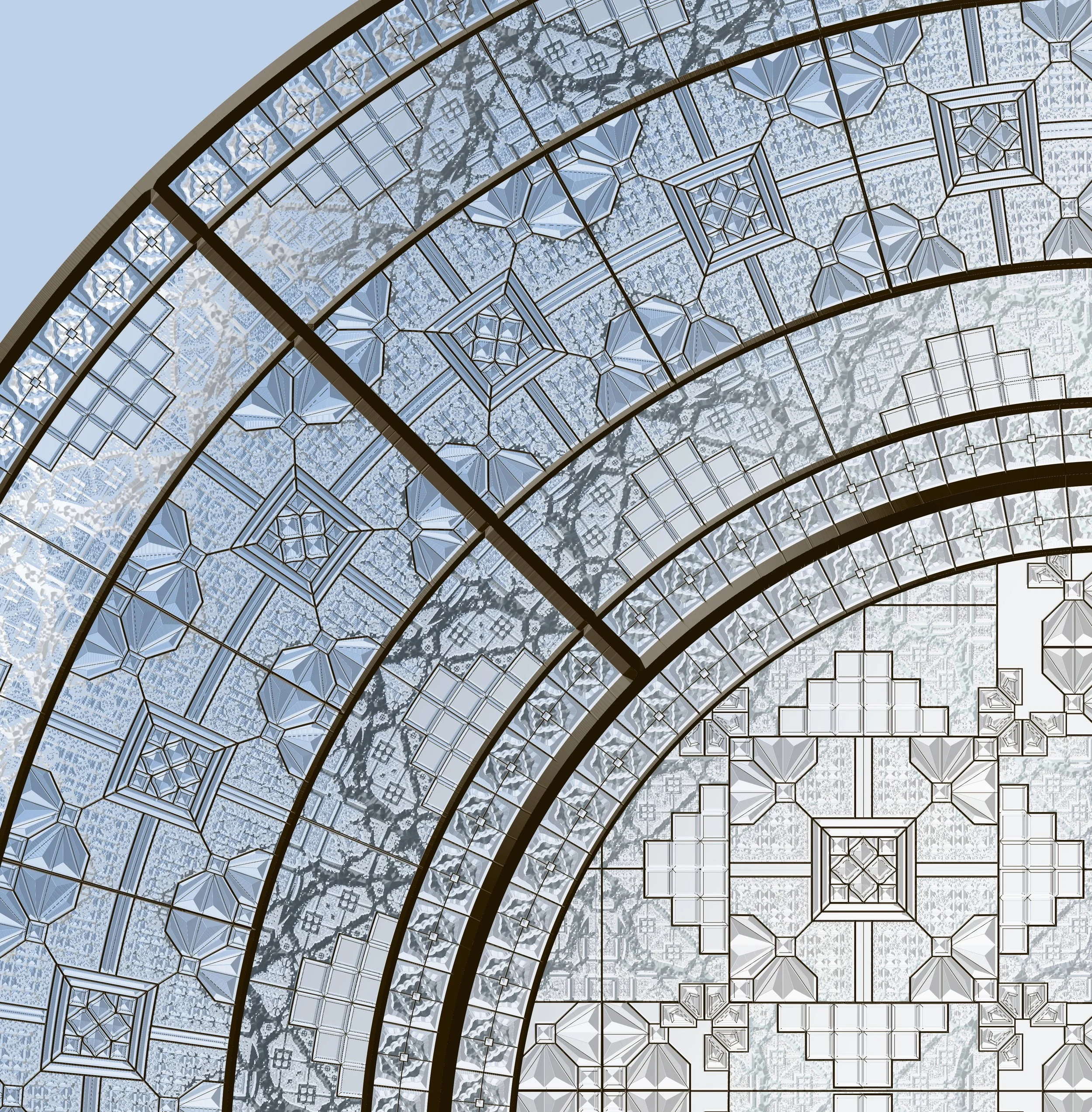
glass panel visualisation based on fractal details
this brings me back to the zitozza design tool. in a way, the tool (which was itself a collaboration of code between myself and AI) is like a digital box of legos. it allows you to play with infinite configurations and "generate" a personal logic. but the end bit - the actual printing of your rug or the construction of a lampshade - remains stubbornly, beautifully manual.
as i’ve been in the studio this week finishing a made to order lampshade, i’ve felt this reversal quite acutely! the design is a result of a digital system, but the "uniqueness" comes from the friction of the hand-press.
in a world where screens can generate perfection in a second, the value has shifted. the "craft" is no longer in the ability to draw a straight line, the computer has won that race ages ago. the craft is also not so much in making the vision visible any more as generative AI is becoming able to visualise any output in seconds (as a somewhat tongue-in-cheek experiment, illustrated by the banner - created by google gemini, based on the text of this blog post for zitozza.) so the craft is now in the analogue endurance: the labour-intensive process of pressing ink into linen, the subtle variation in pressure, and the time it takes to let things dry.
it seems that it remains the material reality, the expertise, and that artisanal touch is what (by its very nature) cannot be automated. or maybe just not yet, but maybe never, because the handmade would lose its very essence. the machine is already busy doing the “creative'“ part but we still are the ones left with the joy, and also the pain of the puzzle.