

if you’re up to date with your modernism, i’m sure you will have heard the news already about the heralded bernat klein studio by peter womersley. if you’re new, let me break it to you: it is up for auction for a guide price of just £18,000. camper vans are more expensive than that.
but this is a grade A lised building in the scottish borders, currently on scotland’s buildings at risk register - it was already in an awful state in 2016 when i first visited and i can only imagine the state it is in now. as sat derelict since the early 2000s and like so many modernist gems, it’s not only been neglected but overlooked. with its protected status, i do wonder about the real amount of funds required to restore it into anything structurally sound. but one can dream, right?
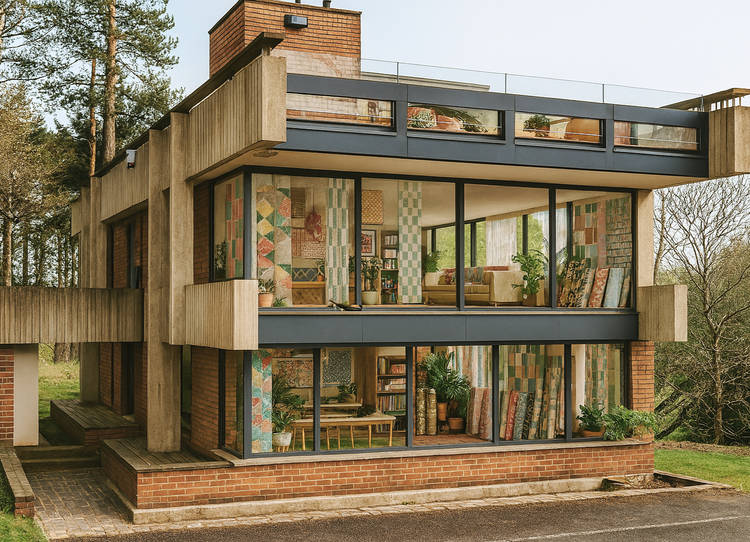
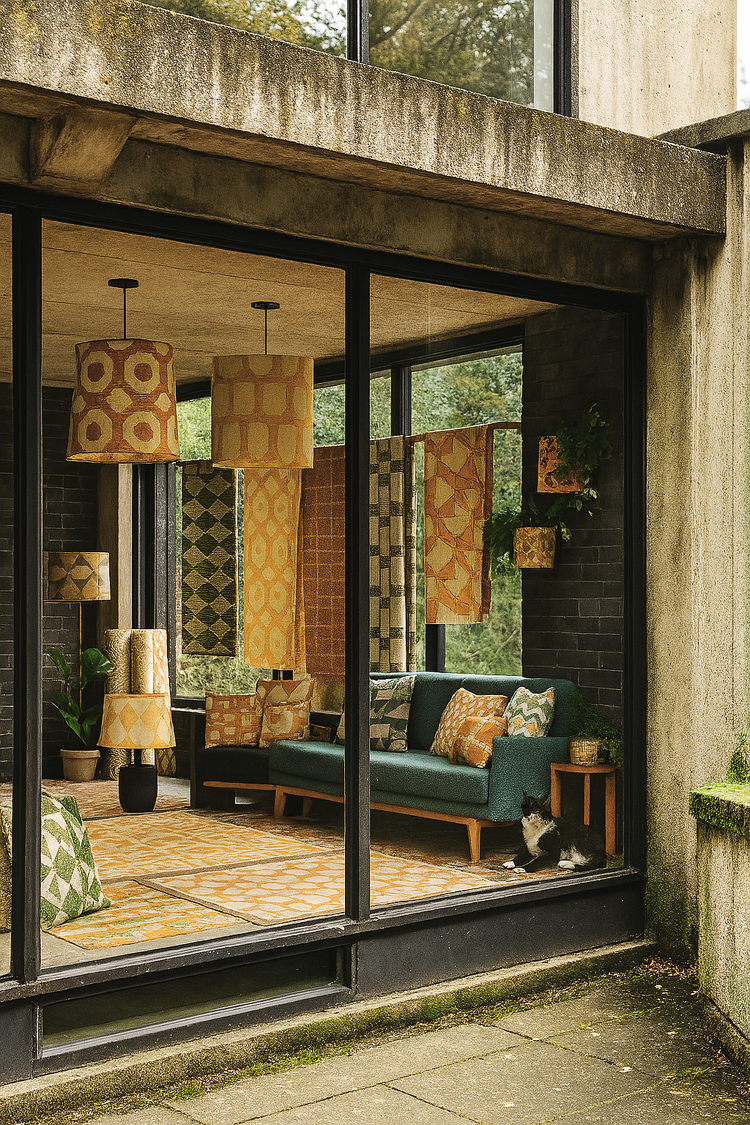
as many of you already know, i visited this building during my university days as part of a project exploring womersley’s work. it left a deep impression, the proportions, the materiality, the quiet authority of its modernist geometry while retaining the human scales and the airy, cantilevered forms that is such a signature style of womersley’s genius.
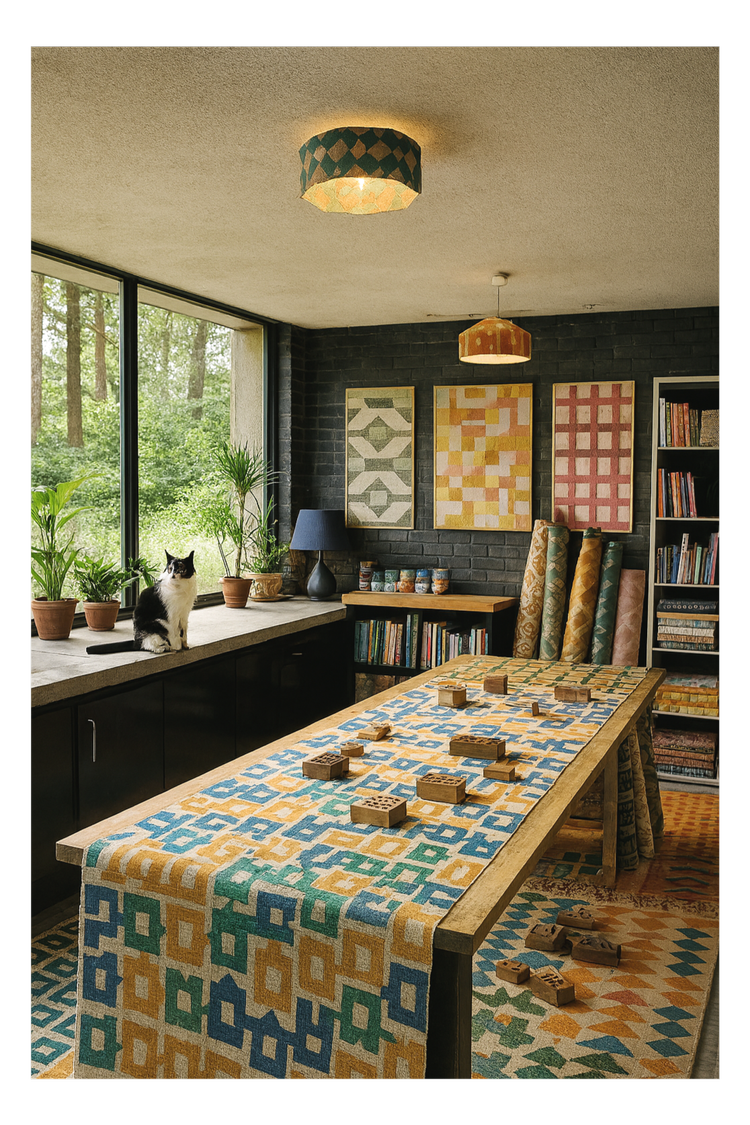
and so, naturally, as a brutalist and modernism-obsessed textile designer, it feels like it’s my duty to fantasise about it a little. so i’ve been daydreaming and i’ve created a series of speculative interior visualisations using AI – don’t shoot me for using it, i know fine well these renders are a not a replacement for reality (some prints really do not resemble zitozza at all and don’t even get me started on the cat..), nor is this a serious, budgeted proposal. it’s just a little bit of fun to put some ideas out to the universe and help stimulate the imagination about the building’s future. (or as the kids would call it, “manifesting”…)

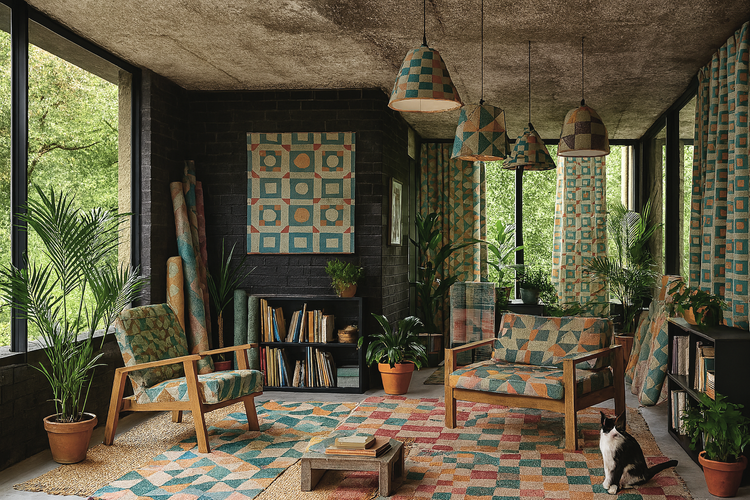
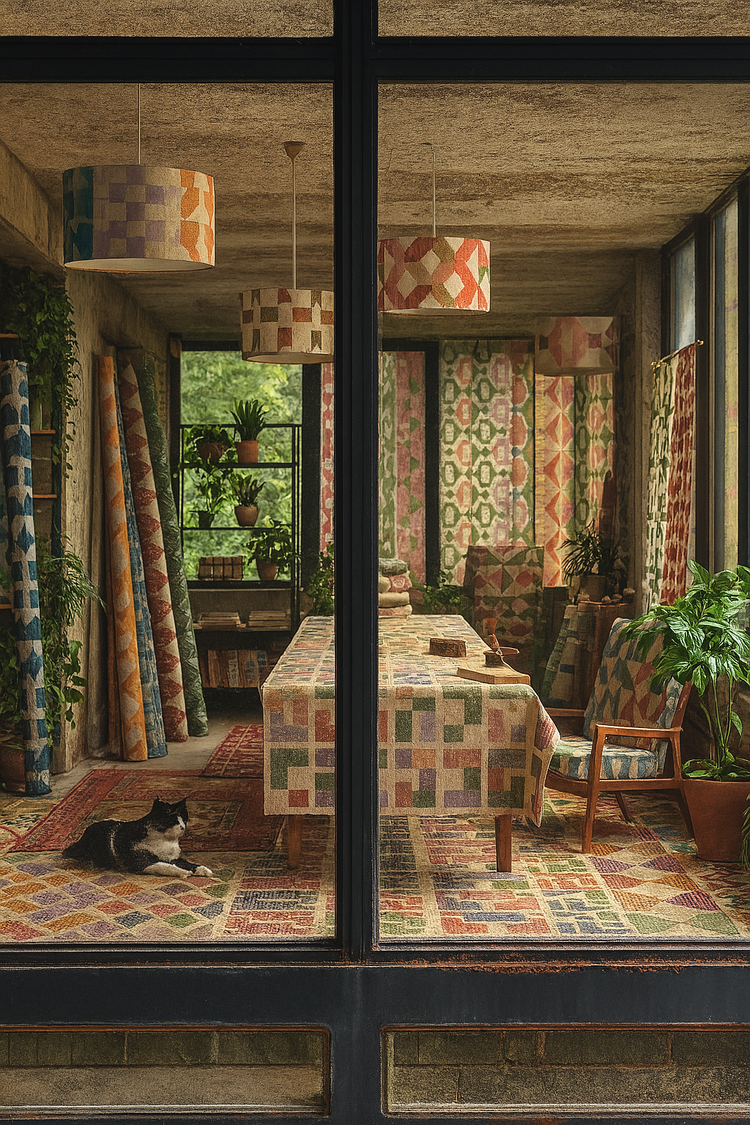
in this parallel universe, the studio is lovingly restored not into an airbnb or a “writer’s retreat” (sorry barnabas calder, love your books but we really can do better here.) so in my head i turned it back into a working textile studio instead. my vision is an idea that is only half-selfish, and it would also contribute to the economy and give back to the scottish borders. i’m obviously thinking about zitozza here, but also a space for creative jobs, education, apprenticeships, and professional development. it could be quite a serious place for the textile industry with not only a space for designing, printing and production but there could also be workshops, residencies and exhibitions – continuing the building’s original purpose and klein’s spirit of thoughtful and considered, sustainable design.
okay, yes, the millions required to make it happen are currently in the realm of fantasy… but hey, everyone tells you that to do well in business you need to dream big so that’s exactly what i’m doing.
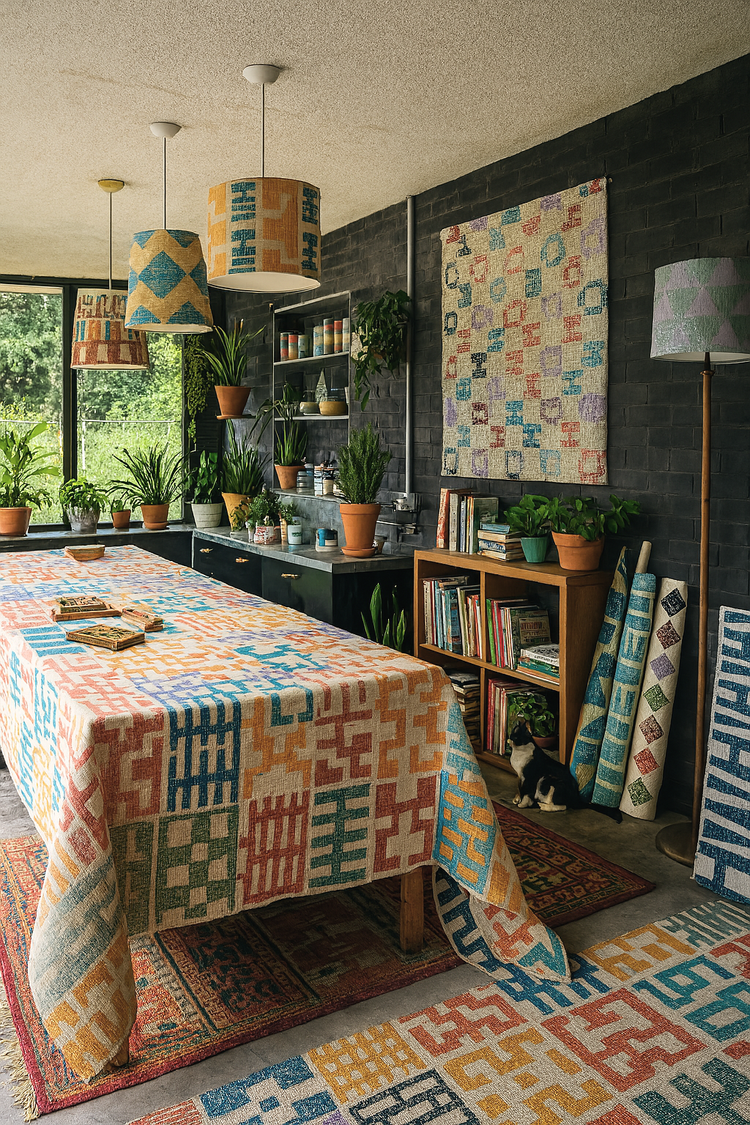
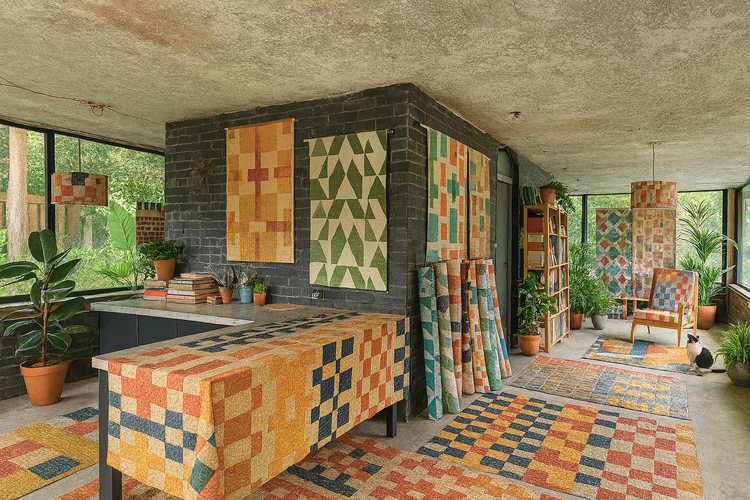
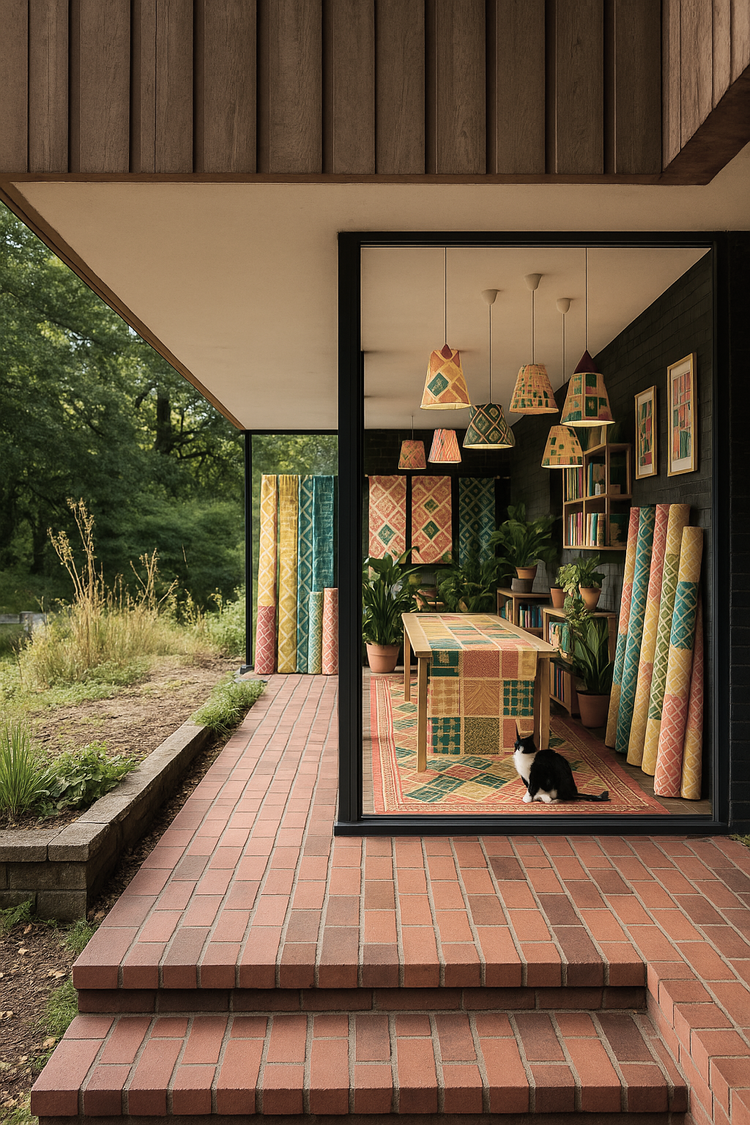
so, here’s a (completely unbudgeted) proposal. we don't need more holiday houses – we need permanent homes for making and creativity. modernist ideas - egalitarian notions of simplicity, abstraction and rational proportions - need to make a comeback and become mainstream again. spaces where design isn’t just theorised and talked about but physically made to furnish real spaces. achitecture, at its best, can enable that.
these are my ai generated fantasies, but it’s also a bit of food for thought. and hey, if you don’t have the money but want to keep the dream alive you can always just buy a teatowel… but if you do happen to have a few million pounds to spare and a soft spot for brutalist textile utopias, well, you know where to find me!
***edit: serious news! you can actually donate to bring it back to life, open to the public as a design centre - the bernat klein foundation along with the national trust and the scottish historic buldings trust have joined together in a bid to raise funds to acquire it and you can contribute to the cause.***