
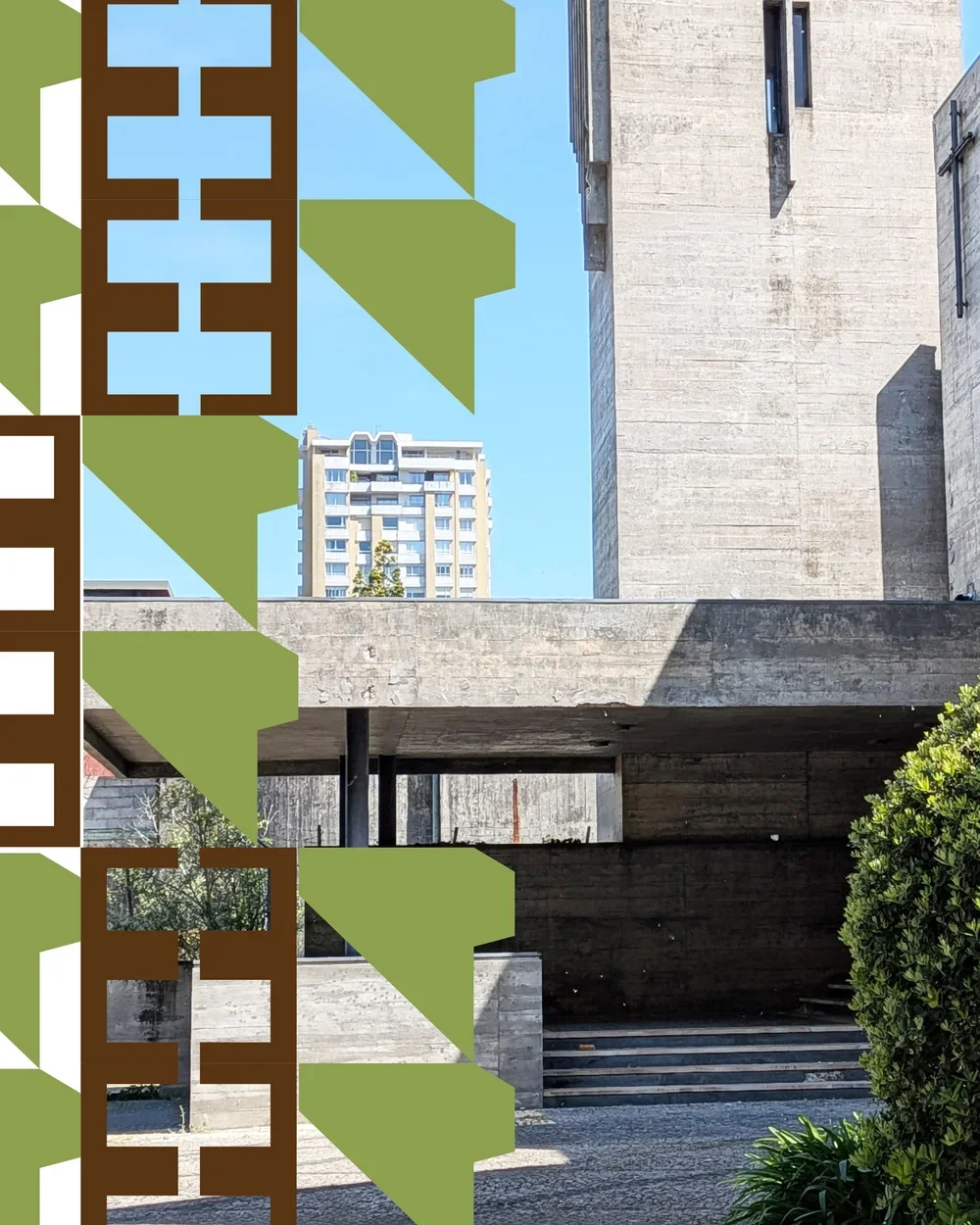
finally some architectural inspiration, and we’re back to somewhere we love: portugal! we have admired buildings lisbon before and yes, something something azulejo related should really coming to the blog… but this time we’re going to porto, and not even too far from the picturesque city centre, we’ll just walk a little westward through the architectural hotspot of boavista .
it’s largely a residential neighbourhood but it has a few interesting buildings such casa da musica (of none other than rem koolhaas) and the faculty of architecture (of course!). these are magnificient buildings, which, i feel, deserve their own blog posts later, trust me they’re coming.
however before we visit these, we’ll just walk through a little bit of the residential streets to two lesser visited sights, one i discovered completely accidentally. i was in search of porto’s brutalist church, paróquia de nossa senhora boavista, when, the residential low-rise architecture suddenly gave way to an immense, towering slab of brutalism: estádio do bessa século XXI, home of boavista f.c.
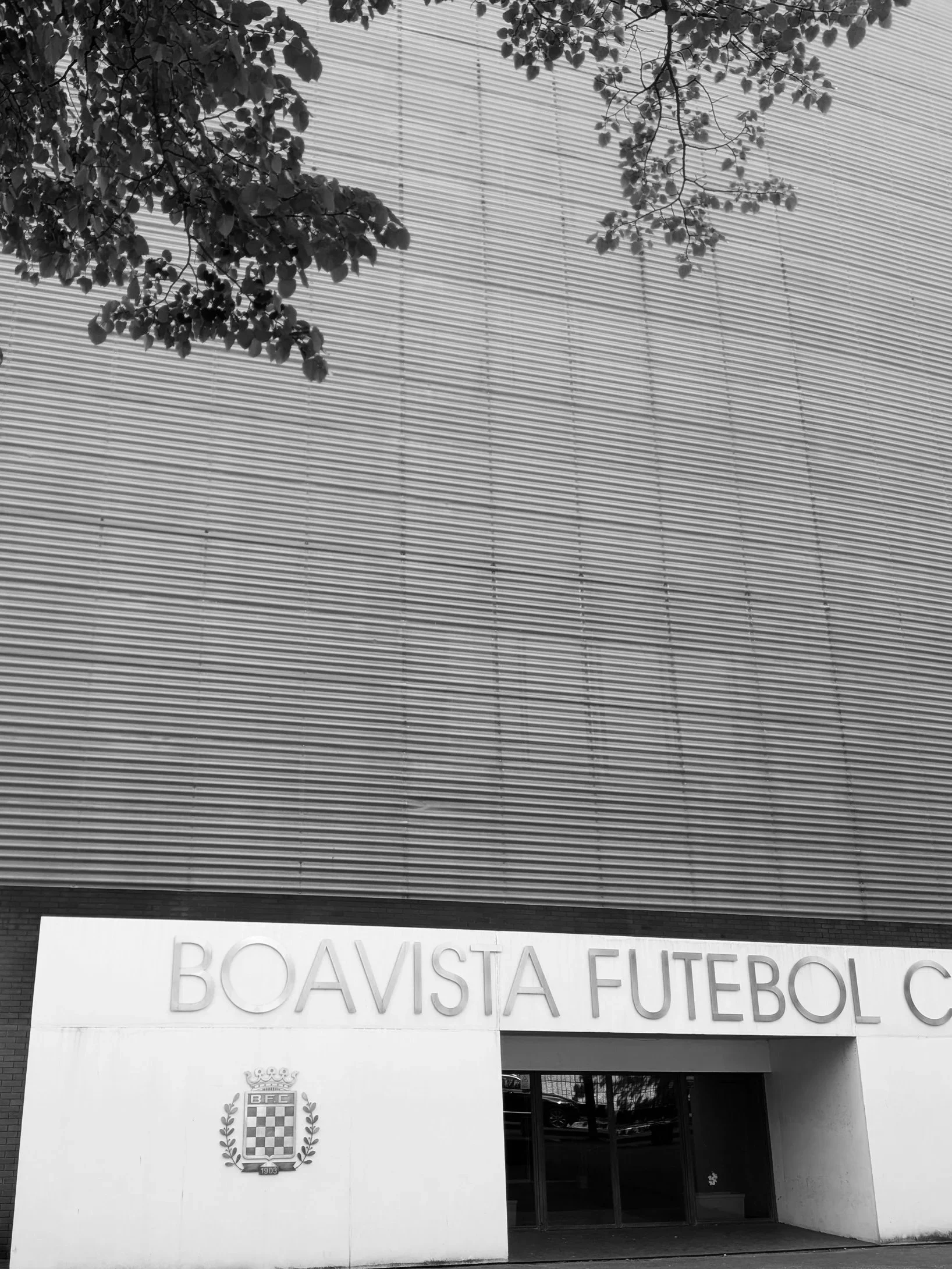
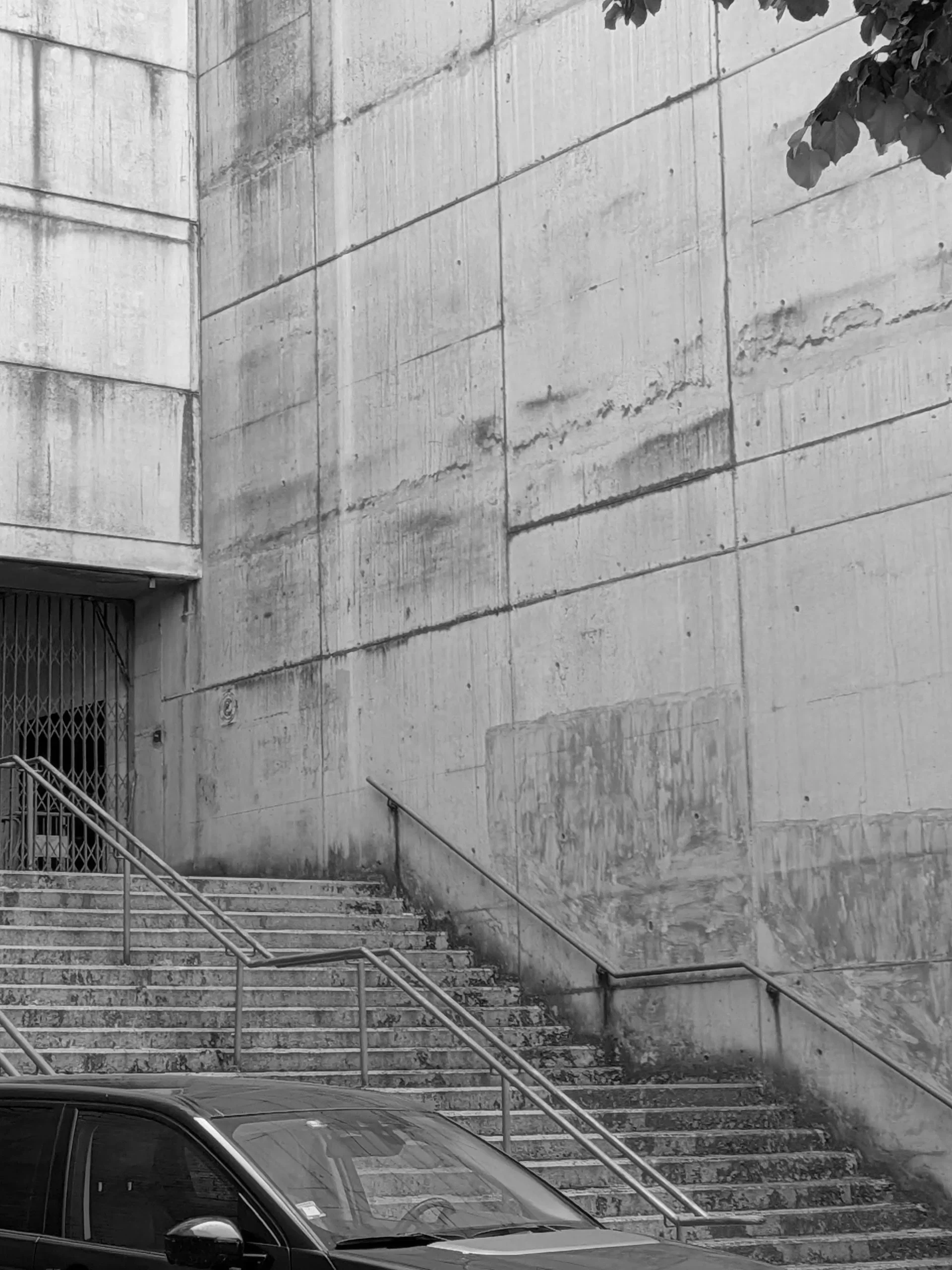
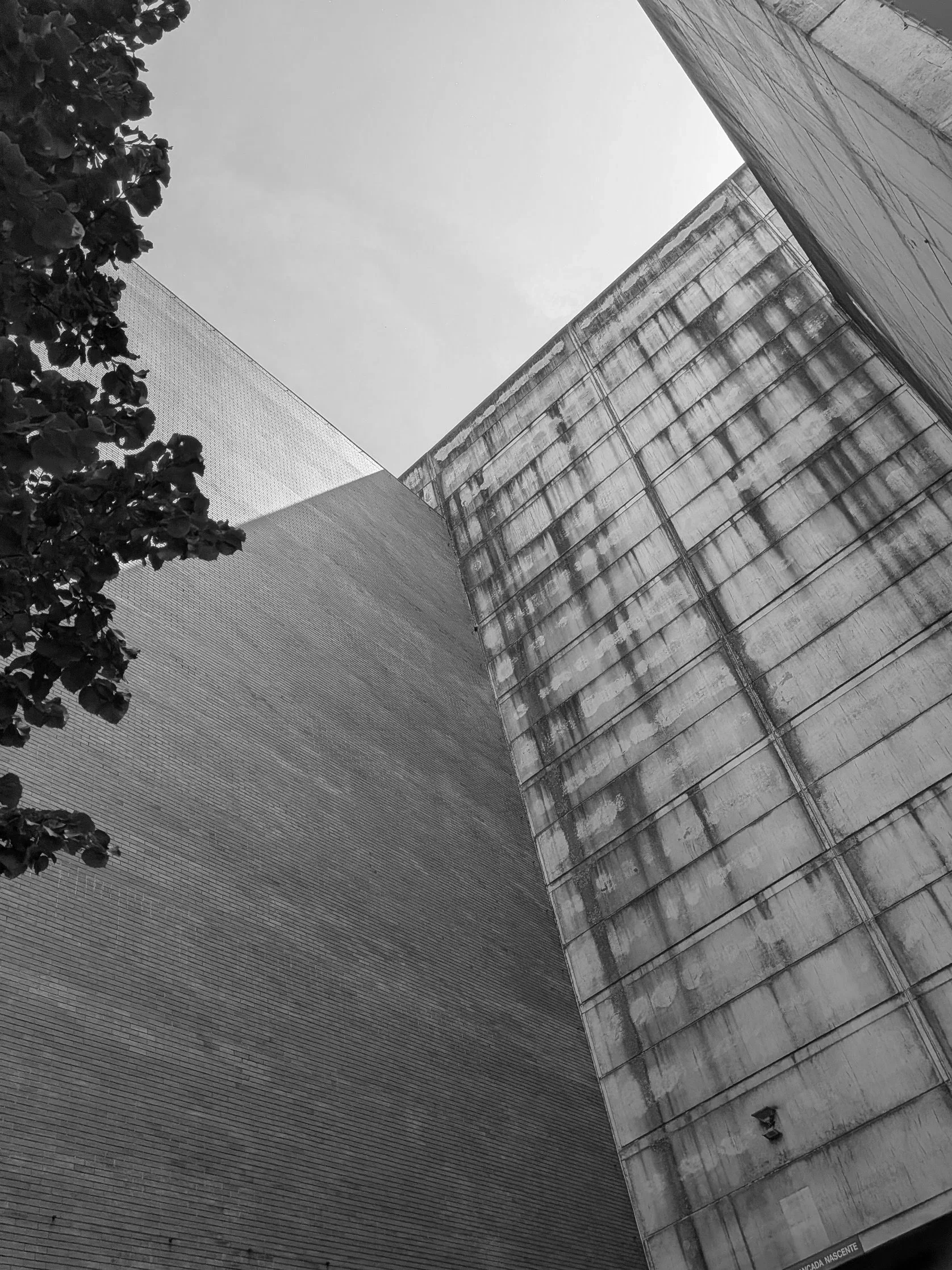
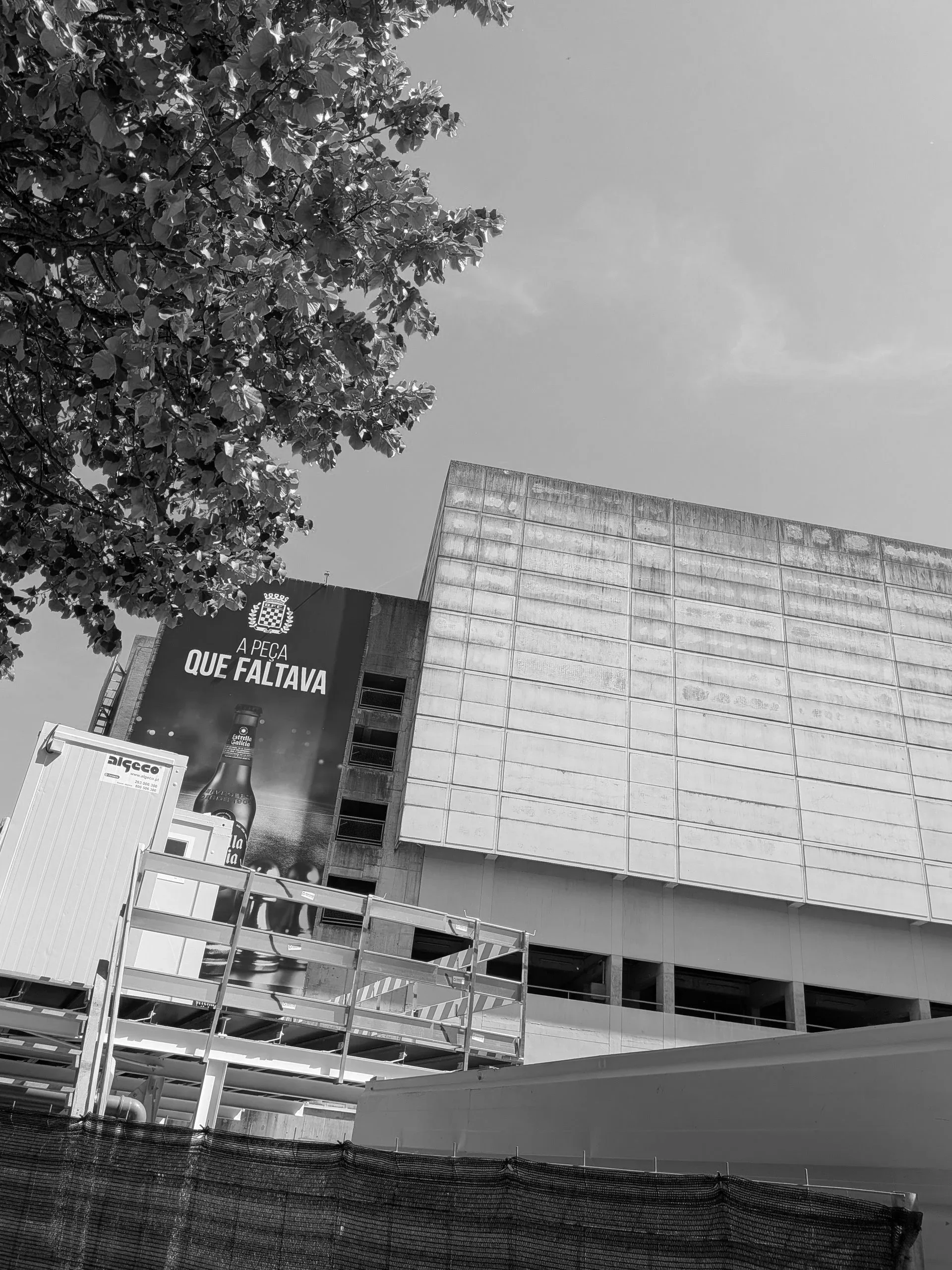
the football club itself is currently non-operational at a professional level - although there was some visible activity, they do not participate in any of the leagues just now and of course visitors couldn’t go inside to inspect the pitch. but the football was entirely secondary to the vastness of the structure itself.
what makes it magnificent is the sheer, un-decorated scale of the exterior framework. massive, vertical board-marked concrete panels soar upward to hold an immense structural volume, using nothing but its own structure. there is a beautiful, organic honesty to how concrete ages under the sun and rain; a raw, weathered texture that commercial design processes spend years trying to artificially replicate. it was a brilliant reminder that when a grid is strong enough, it doesn't need to ask for attention.
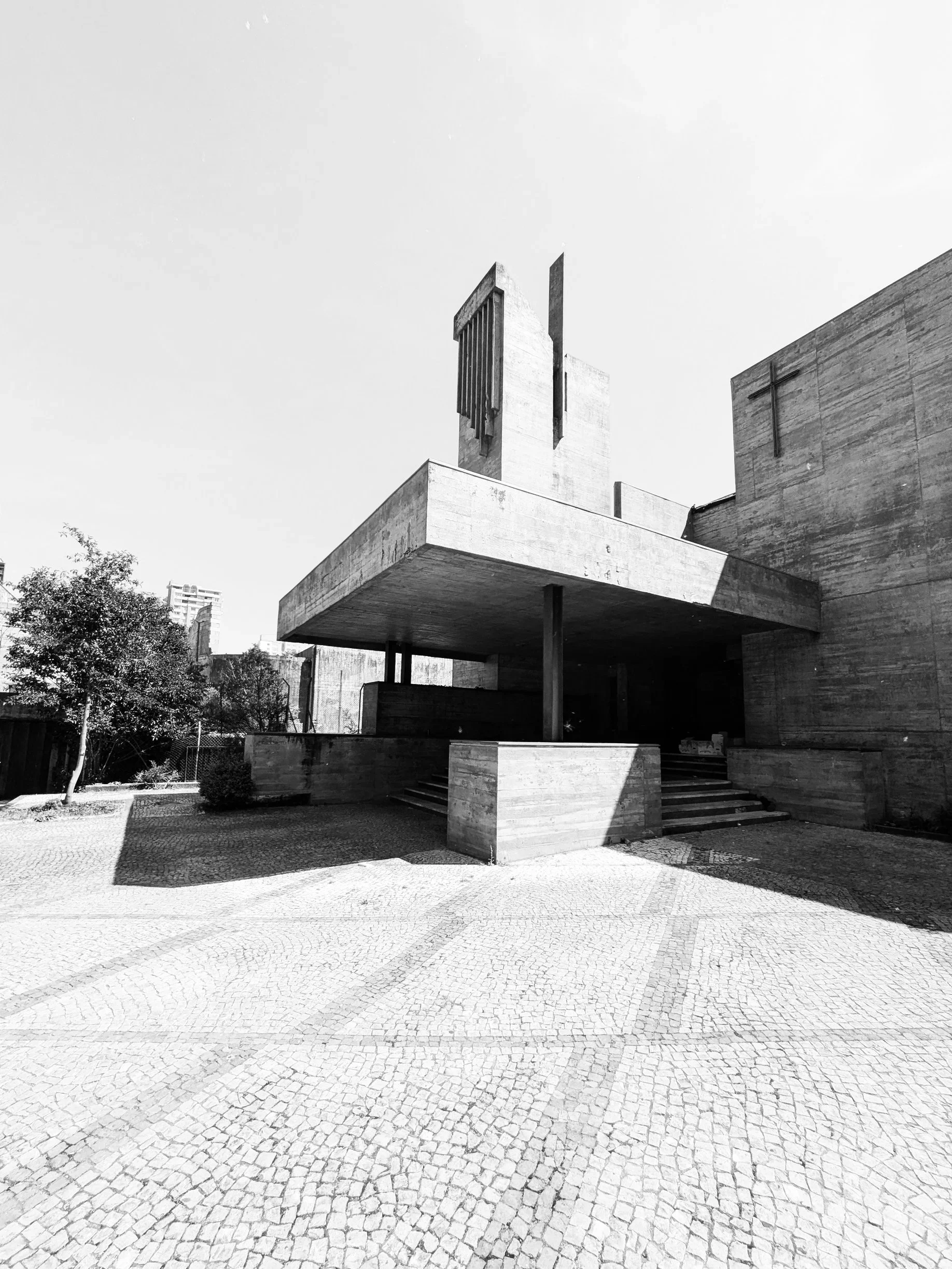
continuing further down the same street, he stark monolithic scale of the stadium shifts into a dense residential grid of modernist blocks. nestled right into the heart of this community, serving the surrounding apartment towers, sits our church, the paróquia de nossa senhora da boa vista. designed by the architect agostinho ricca, the church feels less like an isolated monument and more like a functional civic anchor for the local streets.
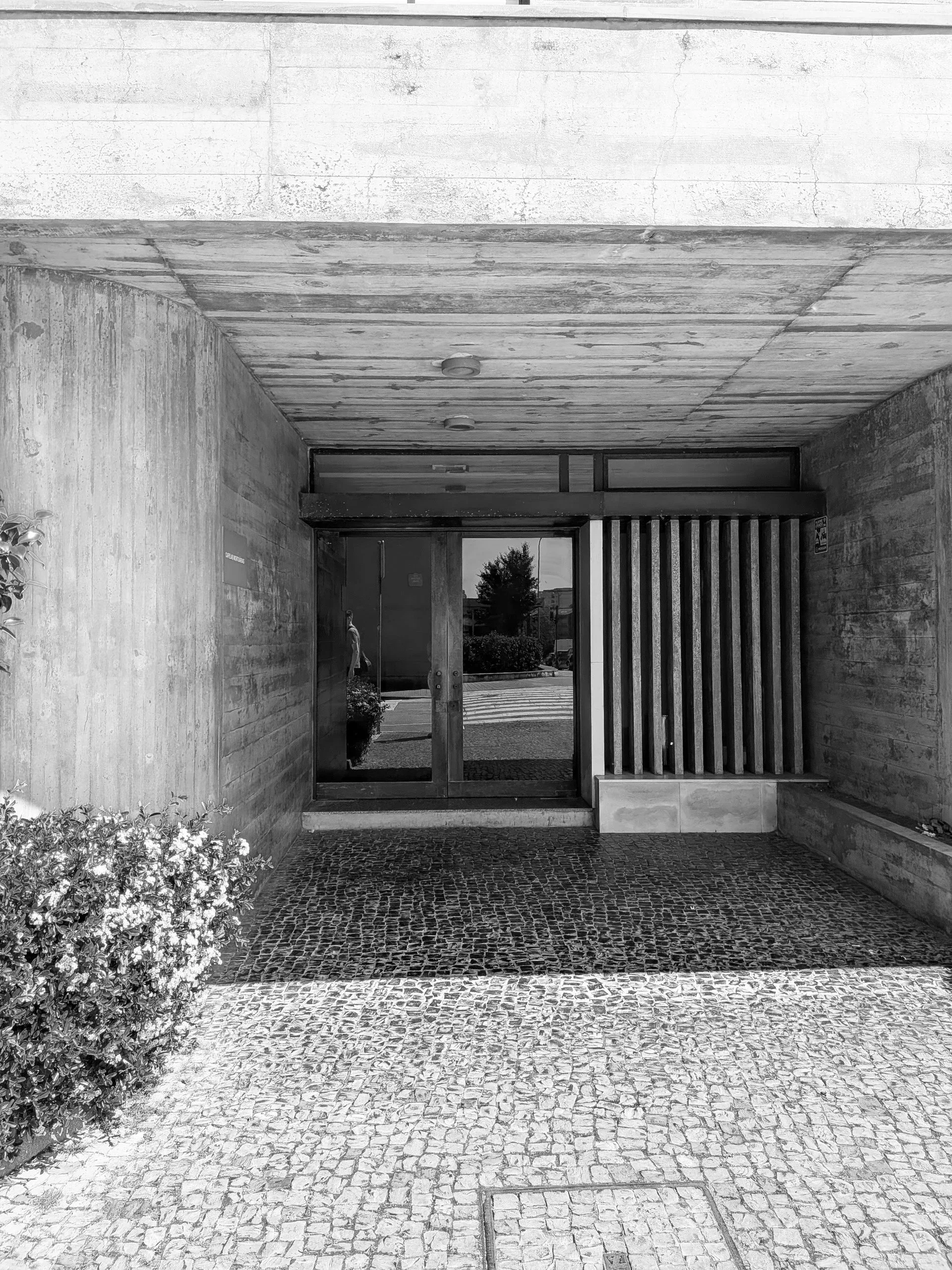
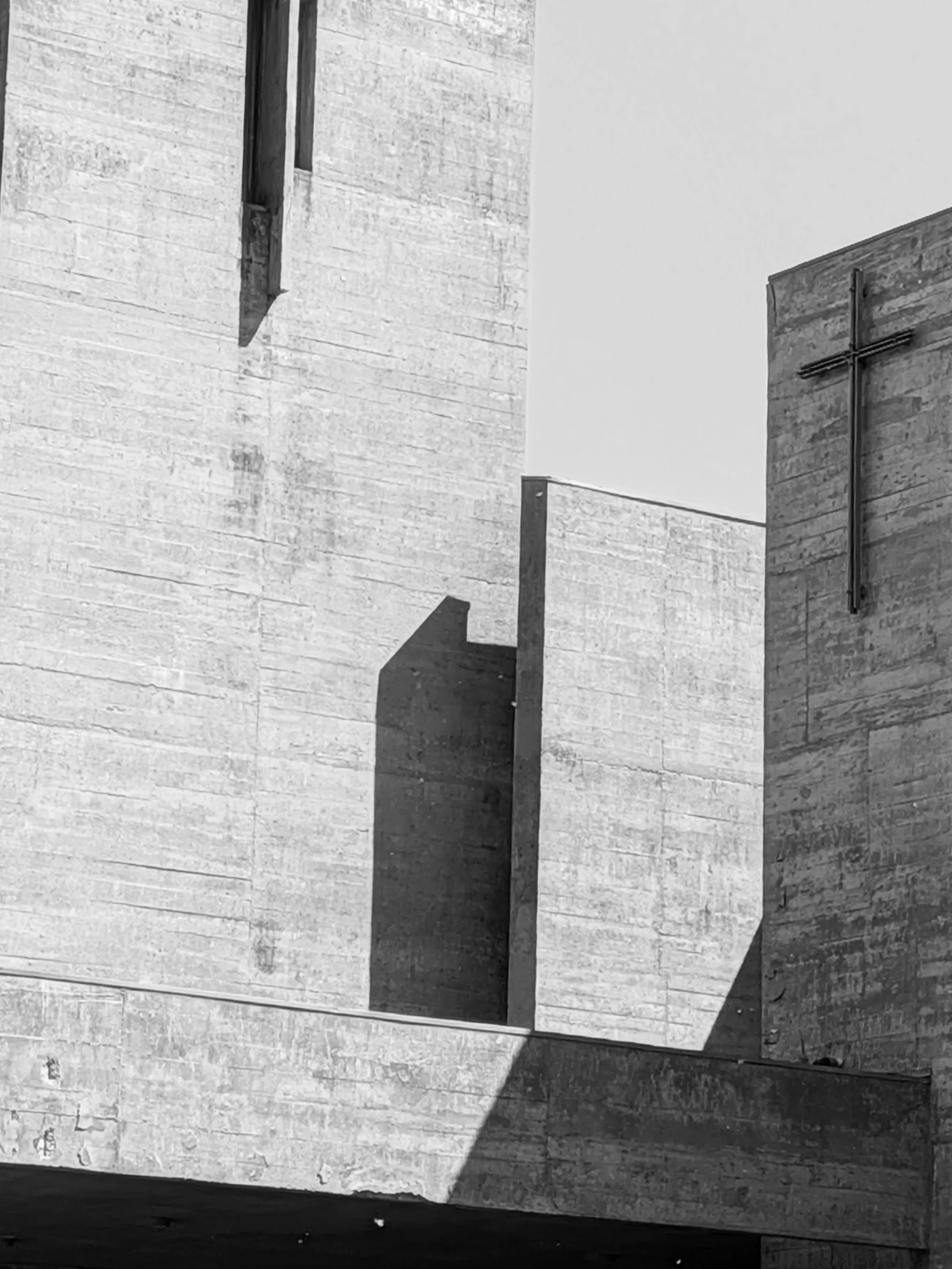
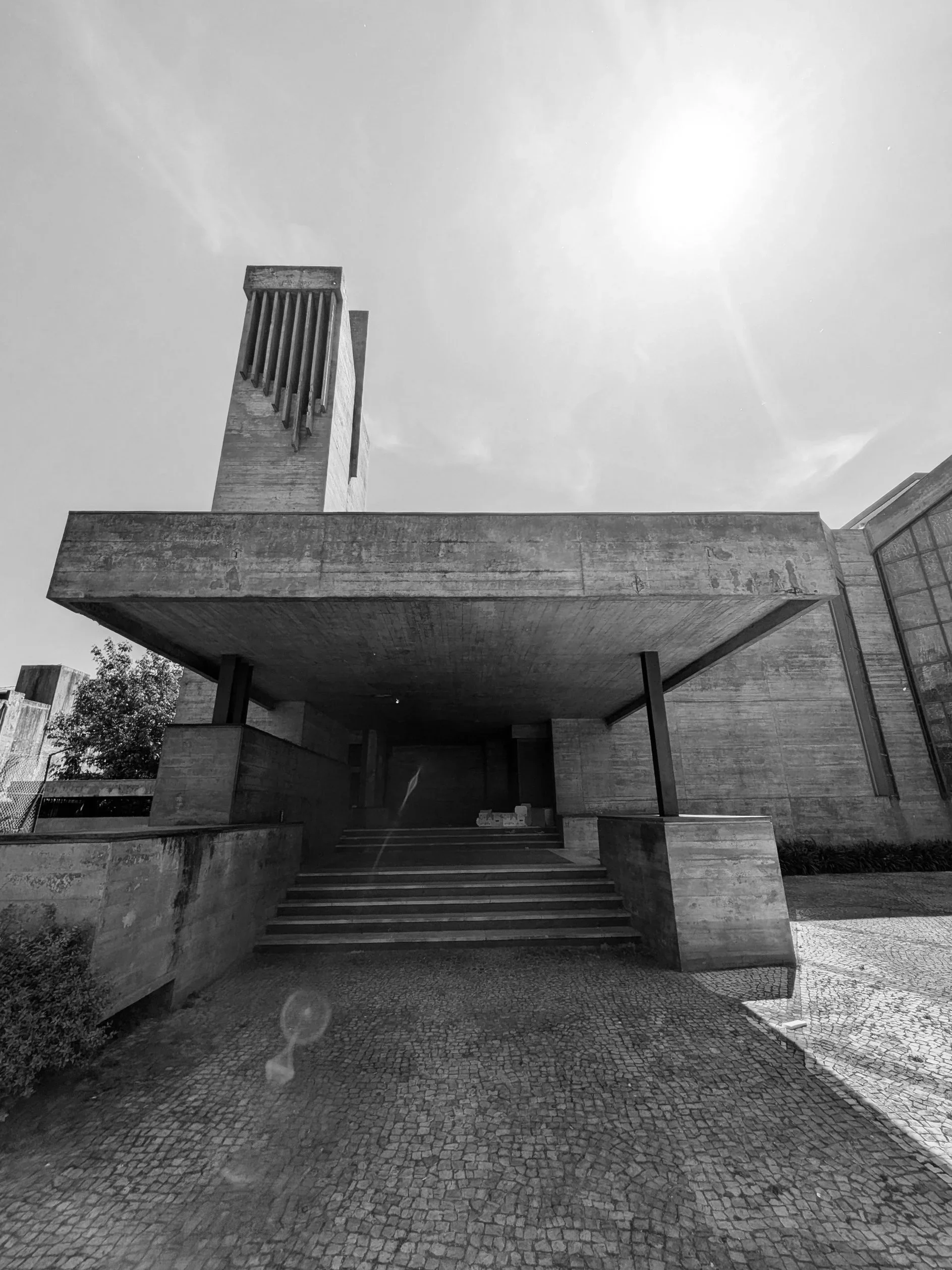
the doors were not open at the time of visit and as such an interior inspection was prevented but brutalism is rarely a style that hides its logic on the inside anyway. the building uses a staggering network of cantilevered concrete canopies and deep recesses that cut sharp, graphic shadows into the stone pavement. the ground beneath your feet isn't just a walkway; it is a meticulously laid out grid of traditional cobbles intersected by dark paving bands that frame the spatial navigation of the entire site.
standing directly under the main canopy, the overhead mass feels impossibly heavy, yet it is perfectly balanced by the strict linear staircase leading into the dark entrance. it is a lesson in how to create a physical transition, forcing you to acknowledge the structure before you even cross the threshold.
looking up, ricca’s genius becomes even clearer. the bell tower swaps traditional religious ornament for a series of vertical concrete fins that resemble a massive, modernist pipe organ. under the blazing sun, these fins break the light into a rhythmic pattern of high-contrast vertical lines. it is exactly what we mean at zitozza when we talk about a structural framework: the form itself is the decoration.
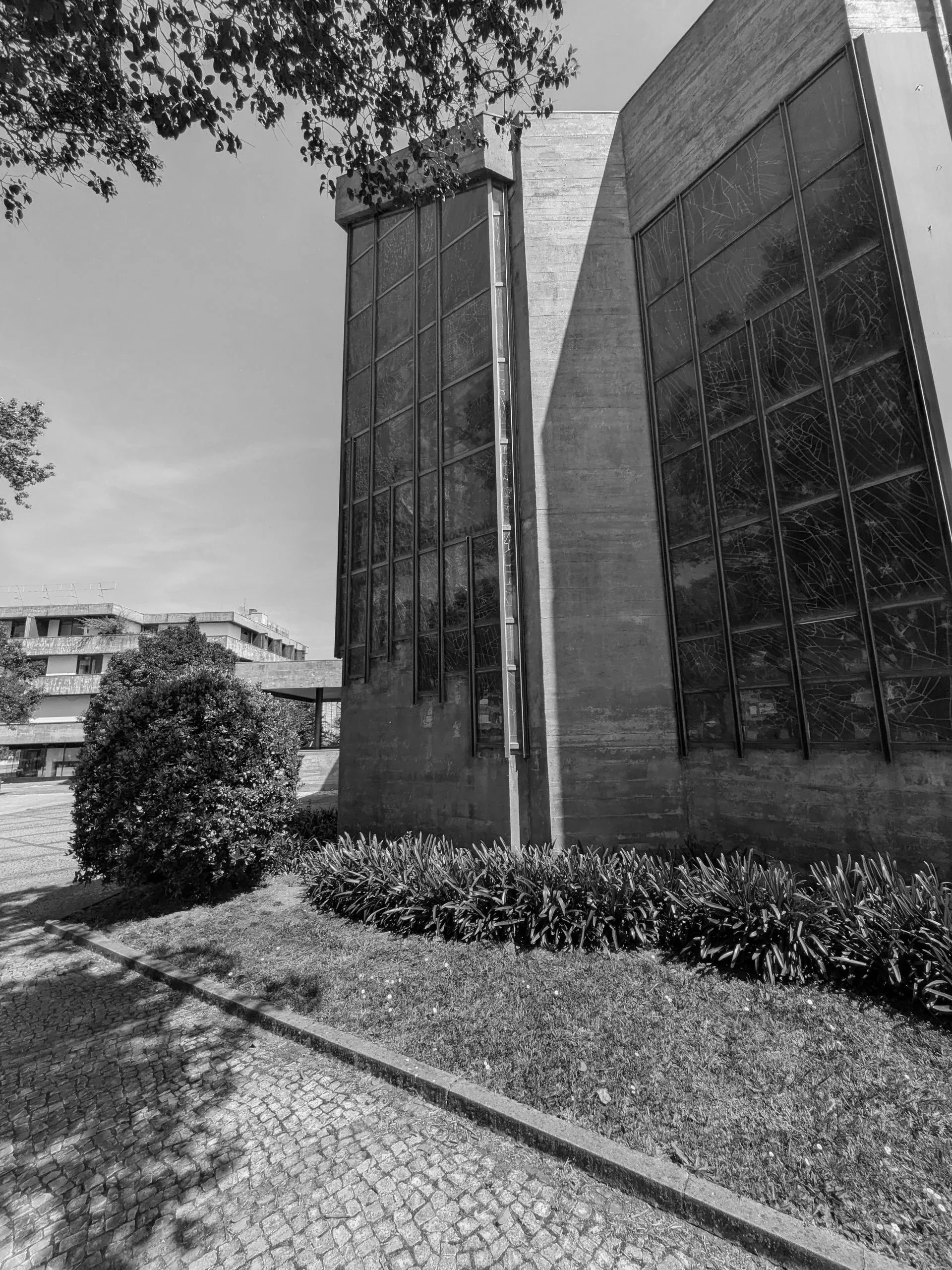
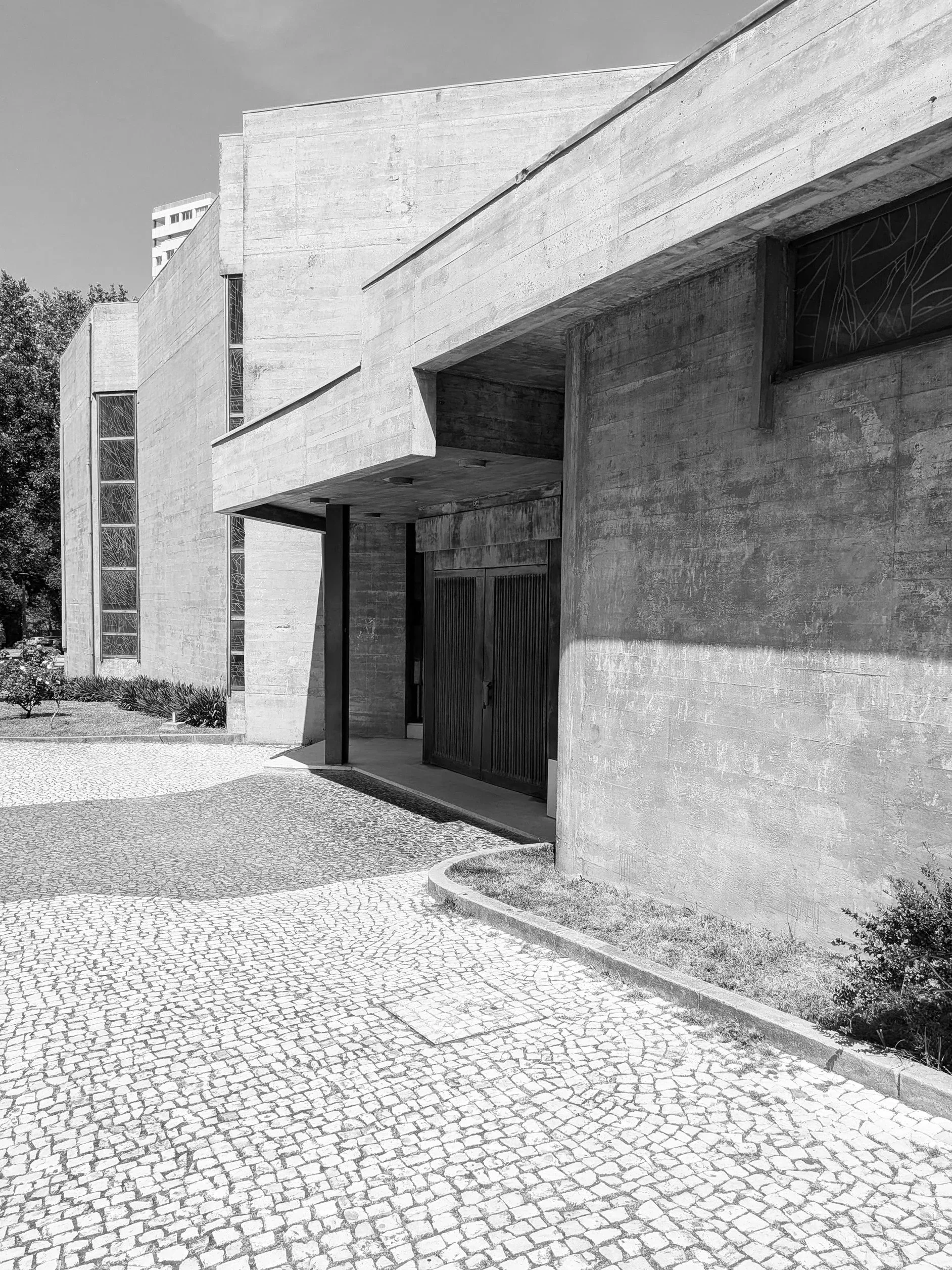
moving around the side of the nave, the concrete walls turn into a spectacular piece of abstract lead glass window of the entire corner building, which i wish i could have seen from the inside as the sunny day would have allowed for some amazing light through for sure.
the church does not exist in isolation of course, it sits surrounded by tidy, tended urban nature and residential blocks and shopping centres, neatly weaving together this part of the city - with a road leading to our next stop, casa da música.
this walk was a necessary recalibration for my mind. the rules do not change. you create a clean, honest, highly functional grid, and you step out of the way so the material can tell the truth. follow the journey for the next stop.