
natural fabrics

BEHIND THE SCENES, TEXTILE INDUSTRY, WORK IN PROGRESS, ZERO WASTE

less, but better placed - editing a studio and sharpening a system

february is a strange month. nothing is quite new anymore, yet nothing has properly begun. it’s cold, functional, slightly grey, all a bit blergh but at least short. and for that reason, perhaps the best time to reassess what a studio actually consists of.

over the past few years zitozza has accumulated many layers. new collections, experimental colourways, limited runs, market editions, trade show pieces. each one served a purpose at the time. each one taught me something about scale, proportion, colour, texture. but accumulation on its own did not necessarily create clarity or systems much and accumulate, it did. so a studio spring clean felt very well due.
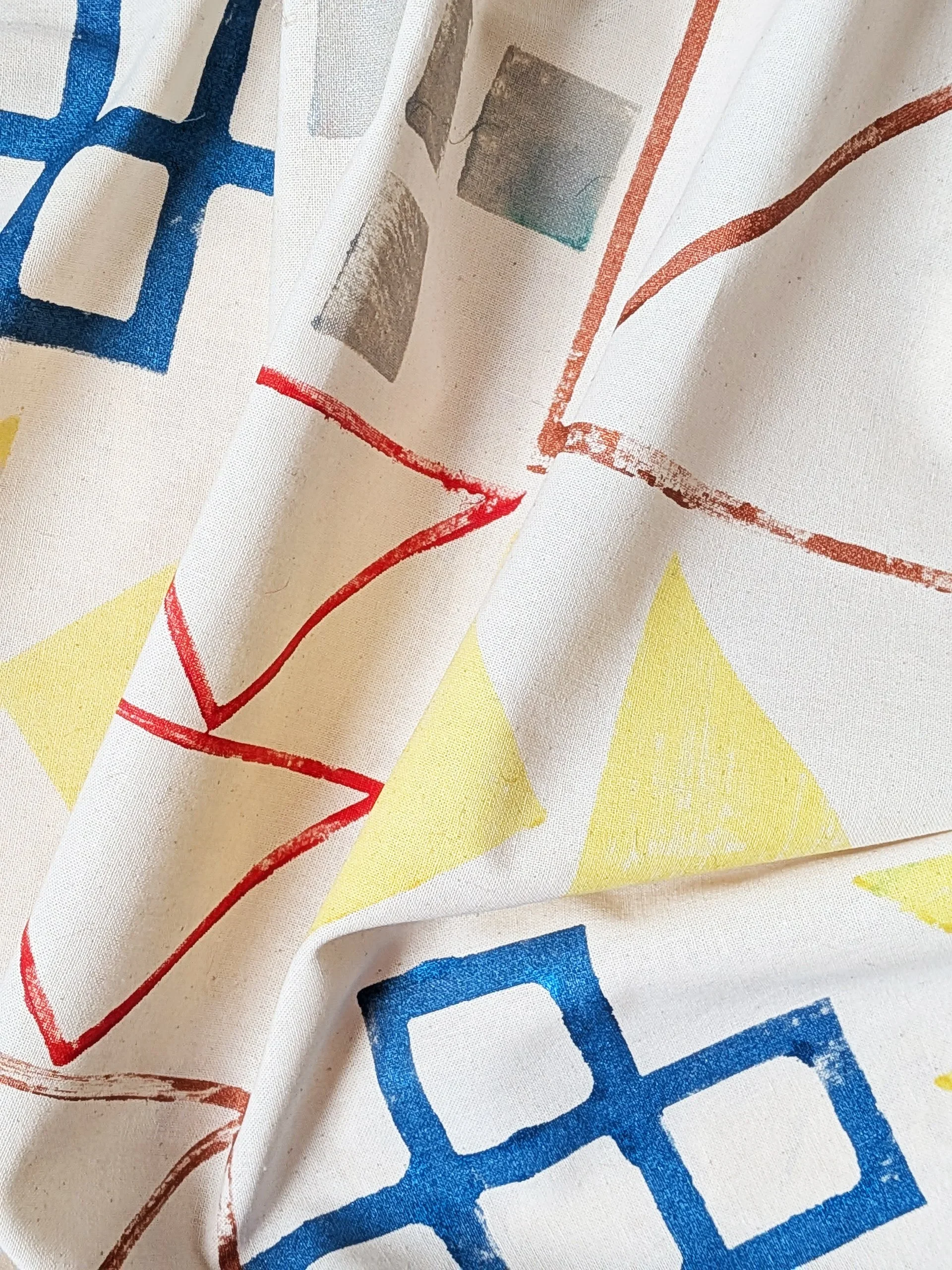
i’ve also been thinking more deliberately about who this work speaks to most fluently. architects and interior designers have always recognised the modular logic immediately: the fact that every block is the same size, that patterns are assembled rather than illustrated, that rotation and proportion matter more than motif. that shared language of grids, ratios and repetition makes specification natural. the textile becomes another layer of construction rather than an afterthought. architecture works because it is resolved. because decisions are made.

that realisation does not change my work itself, but it sharpens the framing i think. when the system is clear, it becomes easier to see which pieces belong at its centre and which are better understood as experiments along the way.

a studio like ours benefits from rationalisation. there are lengths of fabrics, sample runs, end cuts and test prints that still carry the same hand-printing and material weight, yet sit slightly outside the current direction. many, many pieces that were printed perhaps at the very start of our journey, many years ago have become somewhat peripheral to where the structure is tightening. so, opening a material library clearance felt like the most honest way to let those pieces find their context - whether as framed studies, upholstery panels, or small interventions within larger interiors.
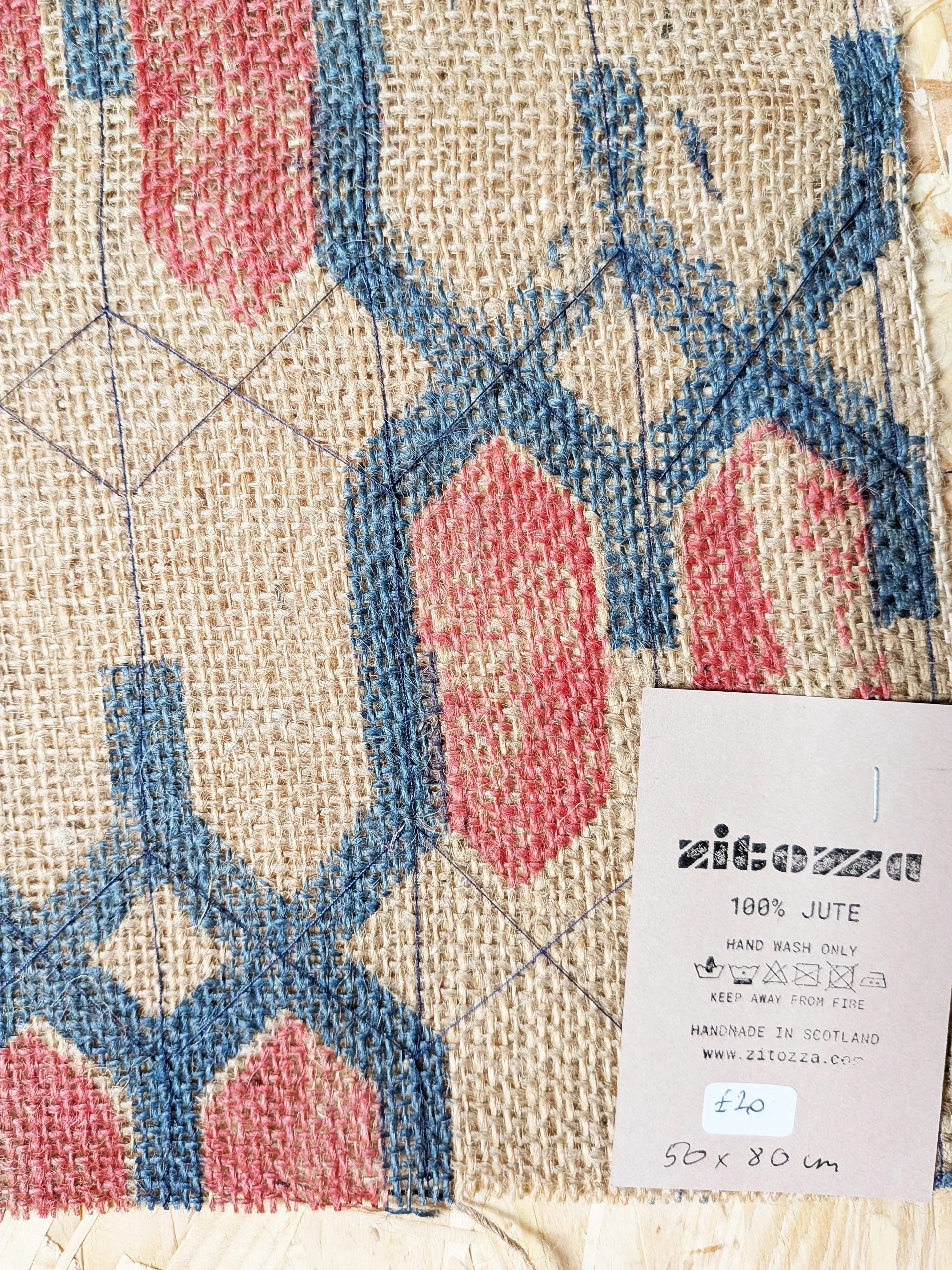
this kind of editing has less to do with tidying shelves and more to do with aesthetic durability. i have written before about resisting the constant generation of new desire. durability comes from coherence. from collections that can sit comfortably in a modern interior without announcing themselves too loudly, yet holding their own against concrete, timber and steel.

what i am aiming for this year is not expansion for its own sake, but refinement. a clearer system. stronger alignment between architecture and cloth. patterns that feel placed rather than applied. and the pleasure of knowing exactly why something is there.

SUSTAINABILITY, TEXTILE INDUSTRY, INTERIOR DESIGN

how the UK's fire safety regulations make it difficult to bring eco-conscious materials into your home

first things first, i have some excellent news to share. zitozza fabrics can now be treated to domestic & contract upholstery and curtain fire safety standards, meaning it can now be used as upholstery fabric (yes, the heavyweight jute has the rub count too for general upholstery use!)

this is fantastic news and watch this space because some new products are currently planned to launch next year - and in the meantime, please do enquire about any bespoke projects, we’re here and happy to help and print for you!

now, i’m going to write a little bit more about this though because it feels that the issue of fire safety regarding eco-conscious materials is not often discussed - it’s probably because it is not the most exciting of topics, nevertheless it is very important and people in our trade must be aware of all of it anyway.

it is important, because it is estimated that in the uk, 37000 house fires happen claiming 200 lives every year. textiles in the home no doubt play a huge role in how these fires spread and the UK has one of the strictest regulations in the world in place called the furniture and furnishings (fire) (safety) regulations 1988, to make sure that all parts of furniture, filling materials and covers too should be fire resistant for domestic environments as well as contract ones. there are different standards for different environments and materials, but the bottom line is, all cover fabric, even in domestic environments, must be cigarette and match resistant as well. these are uniquely strict regulations and testing regimes that the rest of the world does not match, perhaps for good reason - the problematic chemicals required to achieve fire proof status. watch this excellent newsnight report on the topic, aired in 2017, soon after the devastating grenfell tower tragedy.

The devastating Grenfell Tower fire has prompted a complete review of fire safety regulations in tall buildings. But how fire-safe is the furniture inside Br...

there are exceptions though in these regulations: for cover fabrics consisting of over 75% natural fibre, it is enough to pass the cigarette test only, if it is used with a fire resistant interliner cloth that passes a more comprehensive fire resistance test (schedule 3.) it is quite common for cotton and linen blends to be used like this, without excessive chemical treatments. the regulations specify what they mean by “over 75% natural fibre content” - that is cotton, flax, viscose, modal, silk, or wool. not a very comprehensive list, is it? and because other natural fibres such as jute and hemp are not specified, those of us working with these fibres must treat it further to pass the more stringent match test too. luckily, zitozza jutes can be treated for these standards. the treatment does not seem to damage the print or the fabric in any way, and we’re happy to supply it for you to even contract standards.

i am however quite disappointed that in the case of jute (and hemp - probably the two most sustainable fabrics in the world), chemical use is the only route to compliance. i don’t know whether the treatment itself can be made more environmentally friendly, but at the moment it certainly does not seem to be health friendly - many of the chemicals used for such treatments have been found to disrupt hormone function and increase cancer risk. while the EU are moving towards banning many of these chemicals, in the UK the presence of chemicals in the dust remains a huge concern (and a particular worry with jute because it’s such a fibrous material.) it is argued that due to the toxicity of the fumes, these chemicals on the fabrics can actually make house fires more dangerous - the very thing they are meant to improve.

of course, i’m aware that jute in particular in its natural state is flammable. it’s a dry, woody fibre and dundee was notorious for fires starting at the jute mills. it was worse in the past because of the batching oils, but the amount used by the industry today is a lot more reduced, and i’d like to think, or at least test it to confirm, whether its behaviour would be any different from flax or certain types of cotton. these are specified in the regulations as exempt from the match test (with a schedule 3 interliner) and it disappoints me that jute and hemp are not. this makes it difficult for such sustainable textiles to enter the UK market, at a time when there is a huge pressure to make the environmental switch.

currently these regulations are so strict that even floor cushions count as furniture, therefore, while small, decorative cushion covers don’t have to be treated, for cushions over 60 x 60 cm the cover fabric must also pass. personally, i think this is overkill and while i fully trust my supplier with the safety of this treatment, i’m still being cautious with this product range because i’m worried it reduces the eco-friendly nature of these products.

it’s been a tough situation for many businesses trying to promote eco-conscious design, although i’m aware that there is a lot of research into better, less toxic treatments and i have no doubt that things will improve. i just wish the pace of these changes to be in line with the urgency of the environmental situation.

-

links:

FIRA flammability guides (UK domestic) (UK contract)

furniture and furnishings (fire safety) regulations 1988 (UK government)

testing & standards explained (maureen whitmore, interior designer)

house fire facts (first alert, smoke alarm company)

background briefing - flame retardants (breast cancer uk, charity)

the EU’s quest to ban toxic flame retardants (cool products, ngo)

the use of toxic flame retardants and their effects on health (question for written answer by MEPS to the european commission and their written answer)

britons and their unborn children at risk (the independent, newspaper)

why the uk fire regulations are killing eco-design (e-side, furniture business)