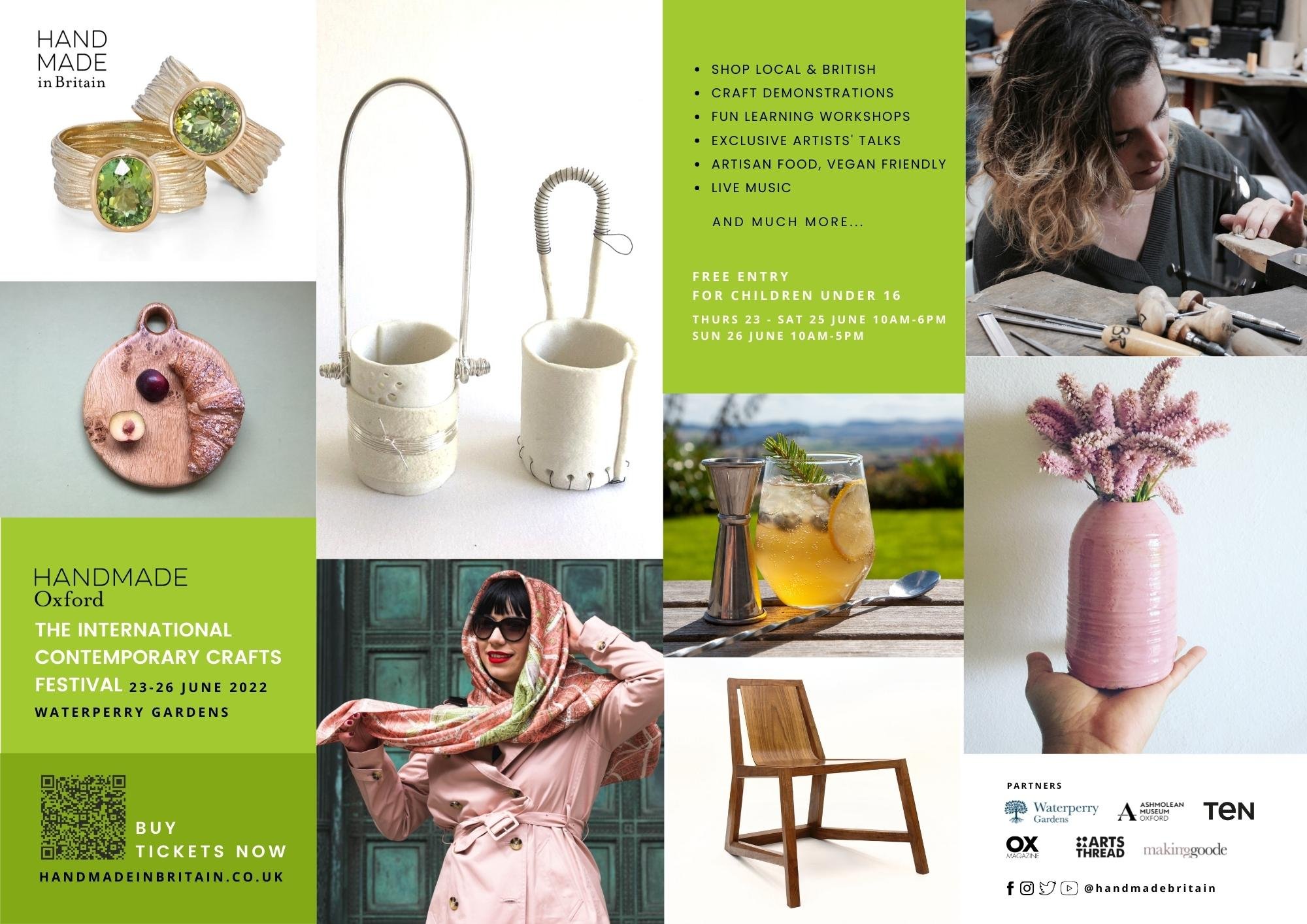
hello! this is just a short announcement but a very, very exciting one: zitozza is now coming to handmade oxford, a 4-day festival of arts and crafts, taking place between 23rd june till 26th june at waterperry gardens in oxfordshire, organised by handmade in britain.
it’s a very special opportunity for us to meet a new crowd of interested buyers and clients, so we are preparing to launch some new collections for this. it feels really amazing to be included in the line-up with so many talented makers from all over the UK, so we’re working on making a good impression there! we are incredibly busy growing our product range and develop new surface pattern designs, it will all be worth the wait and we really look forward to debuting there! you can buy your tickets here and we hope to see you there soon!
hello again - long time no see, in an architectural regard at least we haven’t really been able to publish a new post for a while. that’s all about to change as we have visited a few more sites and we’re keen to show you all the photos in several posts coming (as one-off episodes probably, so no more series for now.)
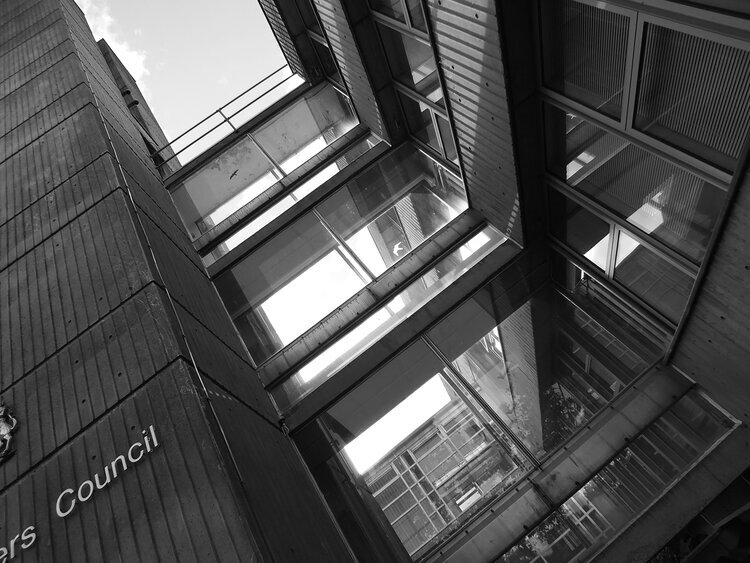
let’s start with the best - the building of leicestershire county council, also known as county hall. it is hiding behind leafy greens in glenfield, on the outskirts of leicester, next to the A50 leading into the city centre. it was built in 1967 and has been used as the county council headquarters since then. names are hard to find, but it was designed by the council’s own in-house architectural team - the RIBA picture database names the architect as thomas locke and the council’s architectural office.
seen from the road, the building emerges slowly from behind the lush trees, showing off its sleek facade. it is only by going closer where the site reveals its enormity - it expands across a huge field, many council departments are located here - but the layout is clear, spatious and airy. from the front, the slightly concave arches on the window frames remind me of a japanese pagoda towering above extending ground floors and an elevated wing standing on v-shaped legs that frame the green view below.
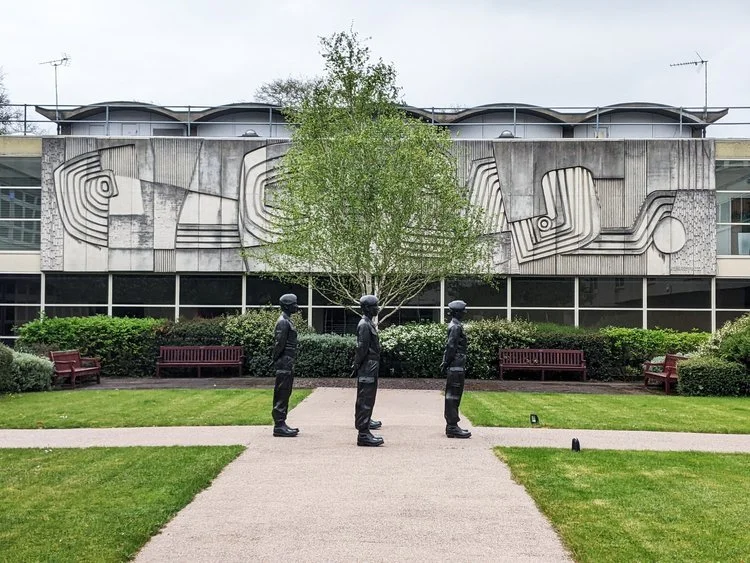
going under these we find a leafy court surrounded by shiny office windows, revealing a cast concrete mural of antony hollaway that depicts the river soar. his style reminds me of the town artists in the new towns of scotland, particularly the art of david harding in glenrothes.
in the centre of the court, there is also an armed forces memorial, added in 2012 titled ‘stand easy’ by kenny hunter - it’s a group of 1:1 life-size sculptures of young personnel. apart from being meaningful piece of art, somehow their placement in the centre also helps reveal the deeply human scale of the surrounding building and how the architects thought about the proportions - you get an inviting, peaceful sense of place here.
there are so many interesting and thoughtful details - the lightwell in the corridor roof above each window section (presumably to maximise the natural light inside) is not just functional but creates a slick, interesting spatial play - it’s a shame the day was not that sunny, i would have loved to see the shadows it creates. the extensive use of glazing overall did make me wonder about the light inside too.
on the left of the tower, there is a relief pattern in the arcade ceiling - here there are two small stairwells that lead to the outer end of this elevated corridor - from here you can take in a nice view of further out of the town, and what i presumed were fountains (i wish they were working that day.) it’s a really beautiful building and i’m happy to see it loved, maintained and functioning as it was intended to - i was not the only photographer on site on the day of my visit indeed!
it is in a remarkably good state compared to many other buildings of the same era i visited and it makes me slightly suspicious that a state of neglect in the case of brutalism could be in some cases a conscious or semi-conscious decision, to have these buildings replaced rather than renovated. but i’m glad that i managed to find one that’s working as it was intended to.
i hope you enjoyed this short visit, there are plans to travel to get out of scotland more often - subscribe to our newsletter to be the first to read about them here! take care.
hello readers! it’s been a while, but i have been blogging, i promise. just not here, but over there at the support the makers, whose network i joined earlier this year, and decided to introduce myself in a short blog post, in which i share a little bit about my background, my motivations and what really is behind the zitozza brand. go have a read for yourselves here!
unfortunately, my participation in their 1st may market at bellfield, portobello (the one announced in the march newsletter), had to be cancelled again - at least not due to covid, but for a much more exciting reason which i will be able to share later! however, it’s still worth a visit so please do go and support the line-up of talented makers from all over the UK.
i’m sure i will be there at some point with other of their markets (a pop-up shop in london is also in the works now - more of that later!)
i will have more exciting news and markets to announce soon, and until then, please keep an eye on the blog, our instagram and of course the newsletter!
much like everyone, we've been left speechless at the invasion and the scale of destruction in ukraine. particularly as a brand that seeks beauty, art, peace and inspiration in the architecture and built structures of eastern europe, it is heartbreaking to watch this assault on lives and livelihoods and we are unable to stand by and watch in silence.
we are a small business and we don't have powerful tools for major fundraisers or campaigns, we have simply donated privately to the british red cross, and we ask our blog’s readers to do so, if you can.
we’re hoping to publicise any other appeals for rebuilding too as soon as they become available for donations. until then, it’s important that help gets where it’s most needed. the red cross is an international organisation with presence inside ukraine providing aid to residents, at shelters as well as helping those fleeing at the borders in neighbouring countries.
we feel it's important that our neighbours are supported and see through this crisis.
first of all, please accept my sincere apologies for reporting on this event so late - as i promised about a month ago, i did indeed visit the scottish interiors showcase in late february and i was really looking forward to telling you all about it! but then, after managing to avoid it for nearly two years, i caught covid, and although luckily i escaped with mild symptoms, it was hard to concentrate in front of a screen for too long. isolating at home with little energy for anything whilst a horrific war breaks out in europe in a place close to my heart really annulled my motivation levels. i’m really sorry that blogging and posting has been a bit neglected.
however, life, and the love of beautiful things must, and will win under any circumstances, i really believe in that. so i’m trying to get back in shape and i’m finally ready to bring you what i promised, with highlights of what i found the most interesting developments from the world of interior design in scotland.
1 - SUSTAINABLE FAVOURITES
so, you know me by now, and as you’d have guessed, the one thing i kept asking every single sales rep that would talk to me was, “how much of this is sustainable?” the replies i got varied, but there was a growing interest and efforts by almost all brands and they mentioned that it’s a question that keeps getting asked. my first focus is on this angle, and here’s my top 3 that delivered:
1.1 william yeoward
the british household name had, as expected, some fabulous products on display. but the best news to report is the launch of a brand new rug collection, from 100% recycled PET. it didn’t look or feel synthetic at all, and the colourways are simply gorgeous. (link to visit)
1.2 designs of the time
i’d say the linen offerings of yvan puylaert’s company was an absolute highlight of the show to me and the tactile qualities of their linens were just a joy to look at. everything is 100% natural and mostly linen. the rep mentioned that they have a hemp line too, but it wasn’t on display as “it’s not popular in the uk - much more so on continental europe”. who’s with me to change that and try to get that here? who’d love more hemp (and of course, jute!) in british interiors?! (link to visit)
1.3 casadeco
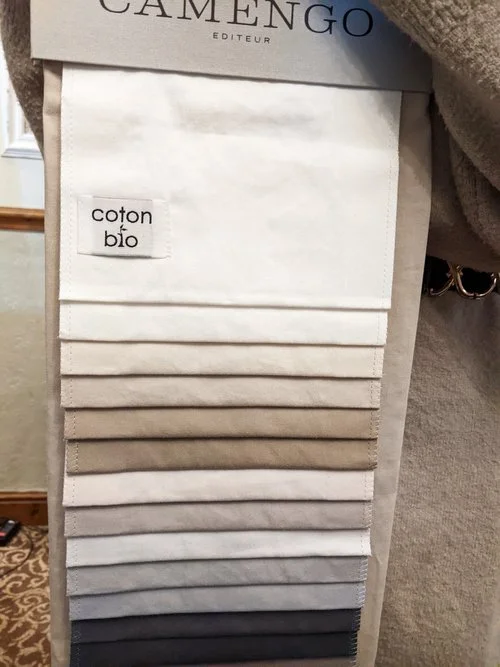
the french group has always been one of my favourite supplier at these events, as i do love their geometric pattern designs. their happy surface patterns were no exception this year either. their newest launch is their cushion line, but their wallpapers were also very popular - for good reason too. however, i’m pleased to report on their wide range of plain, natural and recycled fabrics. (link to visit)
2 - SURFACE PATTERN DESIGN FAVOURITES
perhaps unlike other material expos, this particular event tends to be quite fabric-heavy and the vast majority of the exhibits were an eye-popping display of colour and patterns. i really recommend visiting as it really is a total surface pattern feast! for this reason, the next top 3 is selected from this angle, although it was quite a challenge!
2.1 ohpopsi
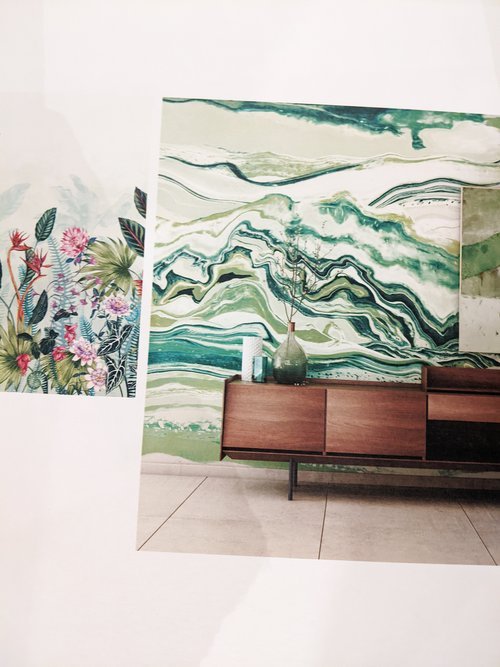
i have never heard of this company before, but their stand was beautifully arranged and proved to be very popular visitors. they also sent the friendliest reps to the fair, who were very keen on sharing some background info as well on their manchester-based company. they offer a wide range of wallcoverings, not only repeat patterns but also mural-style, non-repeating too, with really impactful effect on interiors. i did like some of the brutalist geometries but they do have some amazingly colourful patterns. (link to visit)
2.2 ian sanderson
now, if you are a regular reader, and you know the kind of homewares zitozza has, you know that it’s not a botanical type of brand at all. however, traditional, rich, heritage-based designs dominate this fair quite heavily, so it wouldn’t be fair not to mention at least one of these brands. i’m picking ian sanderson because they have everything you want, from the meticulous reworking of original block prints, through fabulous wovens and a collection of a versatile, cute range of coordinators that are made in the UK. (link to visit)
2.3 prestigious textiles
the pattern powerhouse delivers again, need i say more? i’ve been to a few fairs before and, as a lover of pattern, colour and texture, the pt display is always my favourite. in line with zitozza’s own aesthetics, i was looking for happy geometries and i wasn’t disappointed. the colourways are inspiring me to try some schemes that could work well with these! (link to visit)
3 - MATERIAL FAVOURITES
i keep mentioning that this is a very textile-heavy show usually, however, i want to mention a top three of flooring and hard finishes, because they are an important part of home interior styling. i enjoy looking at interesting surfaces and i can certainly get obsessive with where i want to lay my jute rugs.
3.1 crucial trading
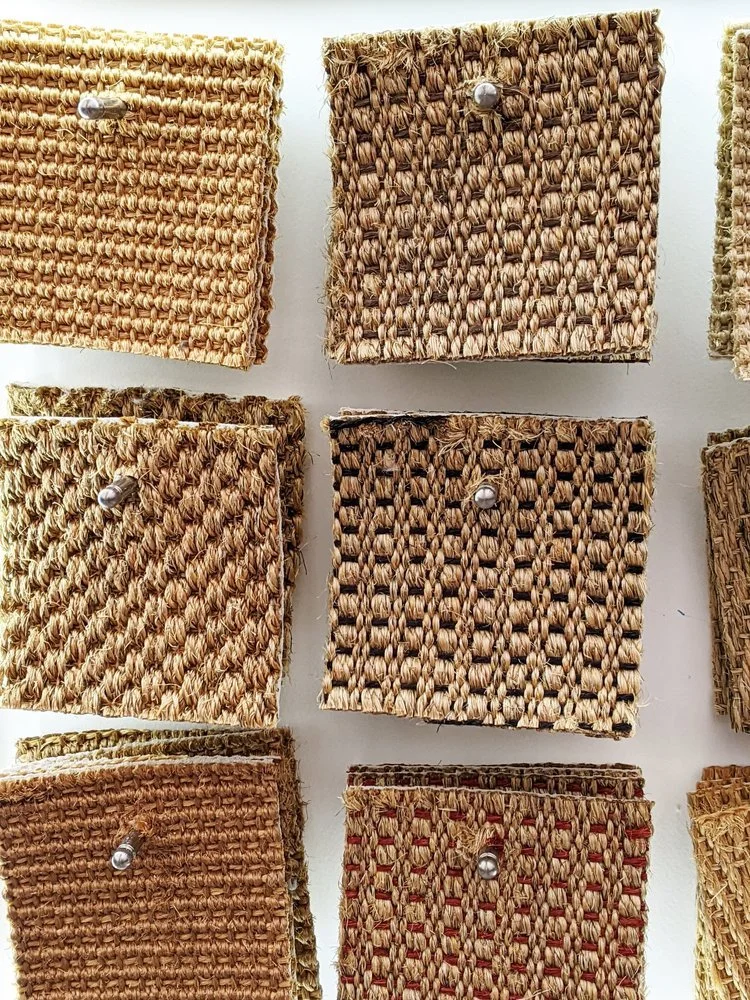
this company had a lovely display of sisal floor coverings in all possible textures and colours. sisal is a natural, sustainable fibre that is even more durable than jute. the gold colour is similar and i got really attracted to this abundance of tactile samples. (link to visit)
3.2 miller’s 1893
i’m currently on a mission for hardwood floors in my own house (also home to the zitozza studio) so i was very happy to find this company. my favourite of their offerings were these antiqued hardwood floors that although they looked like they were reclaimed, they are entirely purpose-made for this somewhat industrial look. really, really fell for these. (link to visit)
3.3 la fabbrica
there weren’t many suppliers of stone or ceramics present, so i feel obliged to mention the la fabbrica range that put lovely, lovely slabs on display of some very interesting surfaces, which i’m sure that fellow fans of brutalism would also appreciate. (link to visit)
4 - OTHER INTERESTING FINDS
overall, it was a great experience to visit, and it’s great to see what some of the best of british and international interior design brands are up to, without having to travel too far, so i do recommend visiting again next year. we’re nearly at the end of this roundup, but i want to mention a few more observations.
4.1 nautical is in!
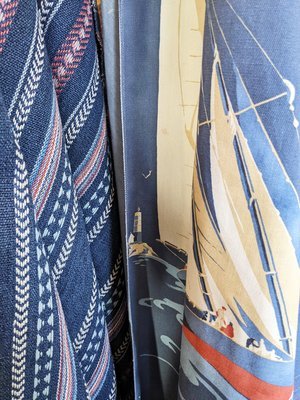
this one took me by surprise (a very pleasant one, may i add), as i do have my own range of nautical homewares. i do it because it matches the golden, raw jute materials i’m working with, but it was nice to see that quite a few brands, such as fryett’s (on left) and mulberry(middle and right)also offers interior fabrics and wallpapers to complete such looks. you love to see it!
4.2 ikat & travel inspired patterns
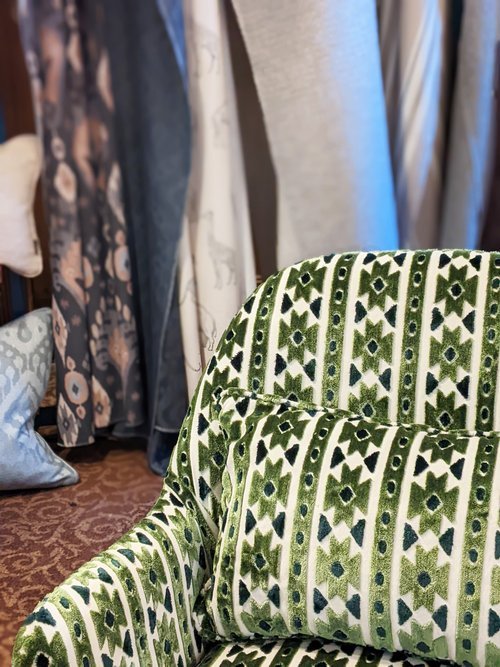
as i’ve written about before in my previous trend-forecasting post, travel inspired decor nand boho chic are going to dominate interior trends for a while. this can take a few interpretations, my personal favourites were from ilivfabrics (left), whose newly launched collection ‘kasbah’ has been evoking the ikat patterns (they also have a sustainable plains range!). for smaller accessories in travel-inspired style, glasgow-based premier housewares(right) had a room full!
4.3 happy geometries
i already touched on a little bit how i was hunting for geometric surfaces in this jungle of floral and heritage-inspired prints, and i think there is a genuine desire for clear-cut shapes and abstract angles. i’m showing you my two favourites here. this wool sample by moon(on left)really made me think of bernat klein, and the geometry reminded me of the architecture of peter womersley. love this pattern and they also released it on throws! the second image is of a print by studio g of the sanderson group(on right) who were present with many collections. it’s the slight handmade, block printed effect on this particular collection that i really picked up on and i hope this proves to be popular!
well that’s it for this year’s roundup! i hope you enjoyed this visit with me, it certainly was a great experience and it’s always a pleasure to take a dip in a pool of pattern, print and lovely interiors.
to keep this already long post slightly more concise, there is no separate section for the links, but you’ll find them all in the text. for further questions, please don’t be afraid to get in touch and for future posts, feel free to subscribe below!
good afternoon - this just a very quick announcement that zitozza joined the support the makers network and will be attending the spring market on sunday 6th march, at bellfield, portobello, edinburgh (16b bellfield st, portobello, edinburgh EH15 2BP) between 11am and 4pm.
this is a ticketed event (costs £1.50) so hurry up and purchase yours now - and see you there soon!
UPDATE 03/03/2022
many apologies but due to a positive covid test zitozza will be unable to attend the market. we are definitely, definitely going to the next one though (same place, in may), so stay tuned and i will leave this post here because i’m sure that it will be still worth attending!
first of all, i apologise for the late post on interior trends, since we’re well into february already. to keep this post concise and focused, i’m going to concentrate specifically on colour and material trends that you might find easy enough to implement in your home (maybe with some zitozza stuff!) and i will expand on the current round-up suppliers and designers offer with a further post after having visited the scottish interiors showcase in a few weeks time. i’m really excited to visit (it’s been two years without trade fairs!), and i thought i’d share a little bit of research of the colour and material trends i expect to see.
1. RECYCLED & RECLAIMED
okay, sustainable design choices are not so much a “must-have-trend” but a pressing, urgent and permanent imperative change, so i shouldn’t really include this in the list but i do because it is getting embraced by more and more, and it may give some ideas to look further and think about what useless old thing you can turn into something cool. for us, it means, patchwork rugs and zero-waste, for others, this could be reclaimed wood, a bit of DIY upcycling, granny’s old nightstand-turned-houseplant shelf? all good and here to stay!
2. EARTH TONES
you may have observed that terracotta was kind of a big deal in 2021 - i hope you liked it, because it looks like it’s going nowhere, just growing and growing with many shades of earthy browns. expect to see plenty of fabulous, warm schemes usually paired with tactile surfaces and interesting shapes and textures, for a cosiness and warmth. it’s all about keeping it natural and down-to-earth - and it can result in a very serene, calming, loving home.
3. GREENS WITH GREENS
it seems that greens with greens in all possible shades are absolutely go this year. it may come in the form of breakfast room green by farrow and ball as one of their 2022 colour of the year, or a paler, more sagey october mist by benjamin moore. or you may achieve it simply with even more houseplants. or why not do all of them! the more green, the better. pale with deep jungle, dark teal with mint, dark olives with sage. they’re all in, and there is very little to go wrong with green!
4. WORLD PATTERNS
this is a very nice one - lord, how i missed travelling! but we are able to do so again so the travel-inspired details are back, with all the patterns from all the cultures and crafts of the world. of course there are more exotic interpretations of this trend than others, but the idea is to show off the individualities of the handmade, crafted details of traditional techniques. embroidery, print, weave - if inspired by experience and seeing the world, all good!
5. MIX & MATCH
the personal favourite has to be always the one that allows the greatest freedom. if you want to match geometric patterns with organic, modern with heritage, everything with everything, then you’re free to do so! this could mean all-out maximalism, colour blocking with bold, bright colours or perhaps cold, metallic details contrasting warm, earthy tones. or, my personal favourite, layering rugs with more rugs! there aren’t many rules here, it’s all about striking the right balance. it might take some brave choices and a little bit of thinking to pull it off, but it can result in the best looks!
this compilation was put together using the sources below, and the images illustrate zitozza’s interpretations, i hope we can show you that whichever way you wish to implement these trends in your home decor, we’ll be able to offer something useful. happy decorating in 2022!
happy new year! and so sorry it has been such a slow start, this is a bit of an admin-heavy time of the year with an ever-increasing to-do list. it is also a time to make new plans and reflect a bit on the past. in that spirit, i wanted to continue my series on books, but looking through my bookshelf and my past influences, i decided to go a little bit more personal, and share some of my graphic design inspirations.
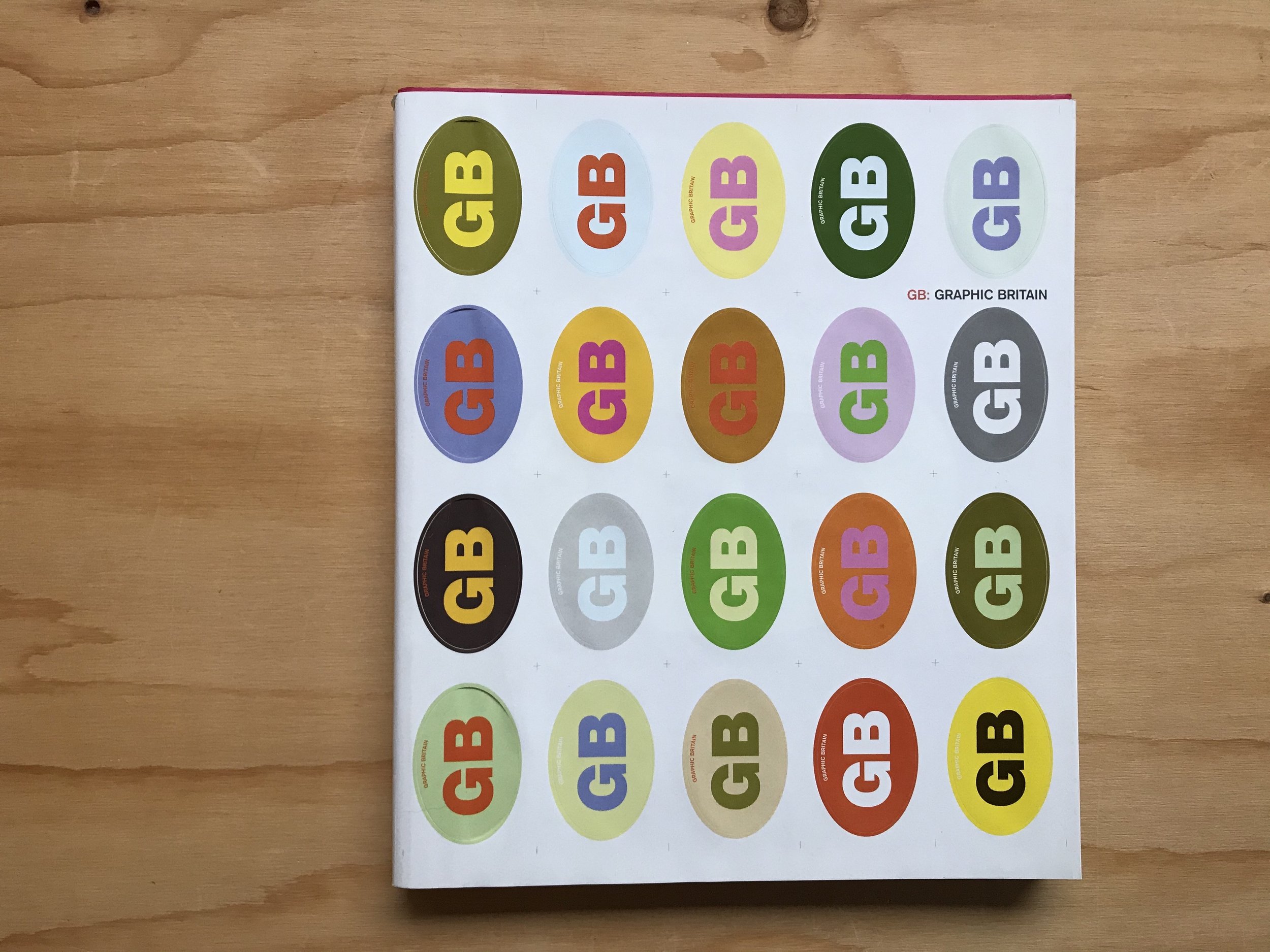
yes, i am also a graphic designer, and as far as skills and interests go, i certainly got into typography before i got into patterns. let me take you back 20 years, as continental european high-school student, it was also the time i was trying to master english and soak up as much of uk culture as i could. to combine these two main interests, a convenient place to go to in budapest was the book shop where they stocked some of the great coffee table books. today i’d like to talk about in particular titled “GB: graphic britain” (burgoyne, p. 2002 laurence king, london) with the aim to line-up some of the coolest up and coming graphic design works produced in the uk at the time.
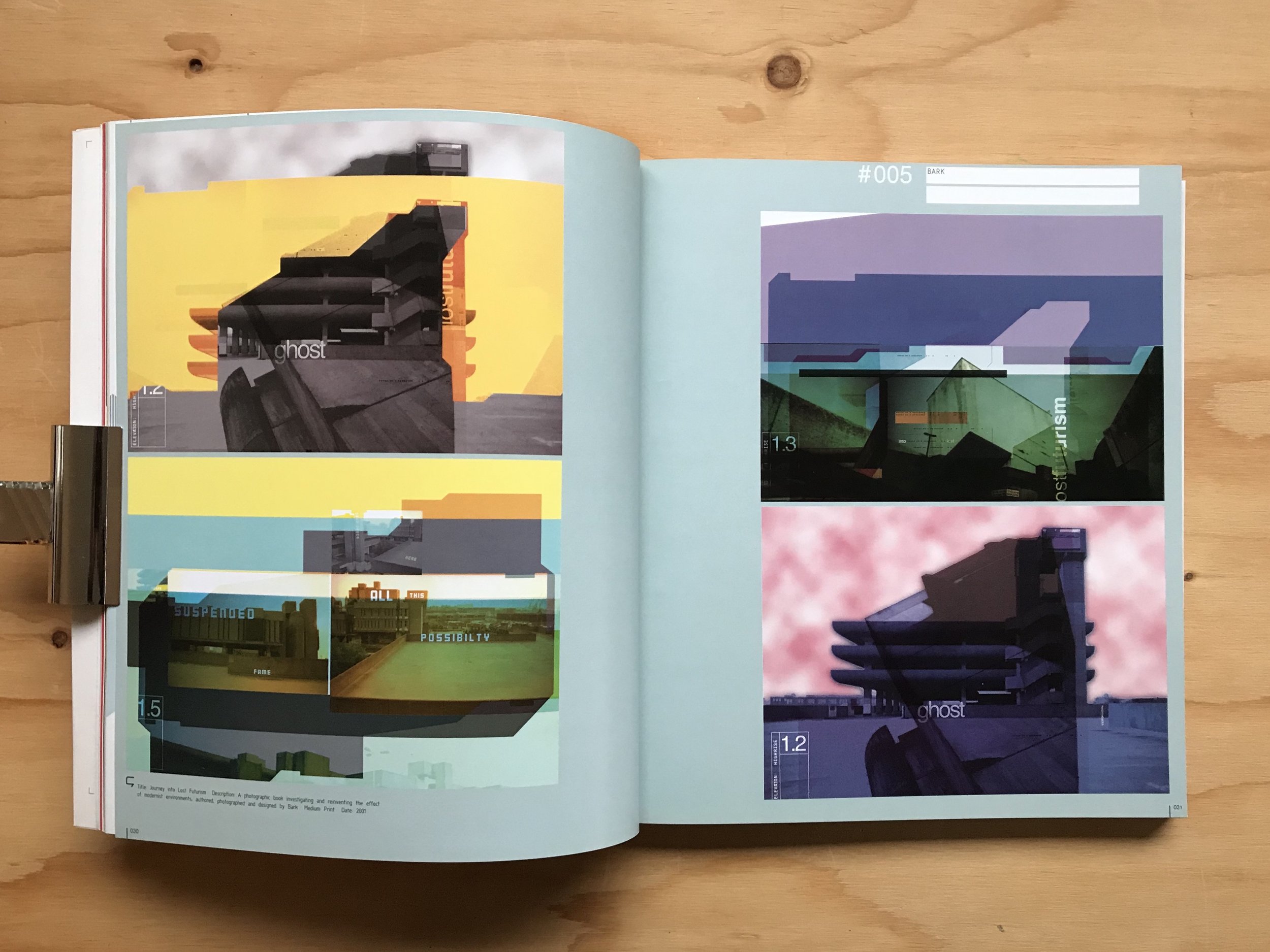
the book was designed by a london-based agency called bark, founded by tim hutchinson and jason edwards and i used to really hunt for their bold and colourful work and i did find them - in another book, “graphic originals: designers who work beyond the brief”(austin, j 2002 rotovision, mies) they talk a little bit about their process through a prospectus they designed for portsmouth university where hutchinson was a lecturer. the project itself was a map, a clever visualisation of the course journeys, but what really caught my eye was that it wasn’t just an raw information graphic, but focused a lot on using a lot of photographs of the built environment, the documentation of very mundane things that reflected on everyday life at the university. it was the first time i’ve ever really seen anything like that but that really was speaking my language. it was just inspiring to see real, successful people in the industry do this - take the built environment, and create a feeling of home and belonging in it by graphic, “2D” means. that’s exactly how i wanted to do design and it was a great contemporary example, right in front of me.
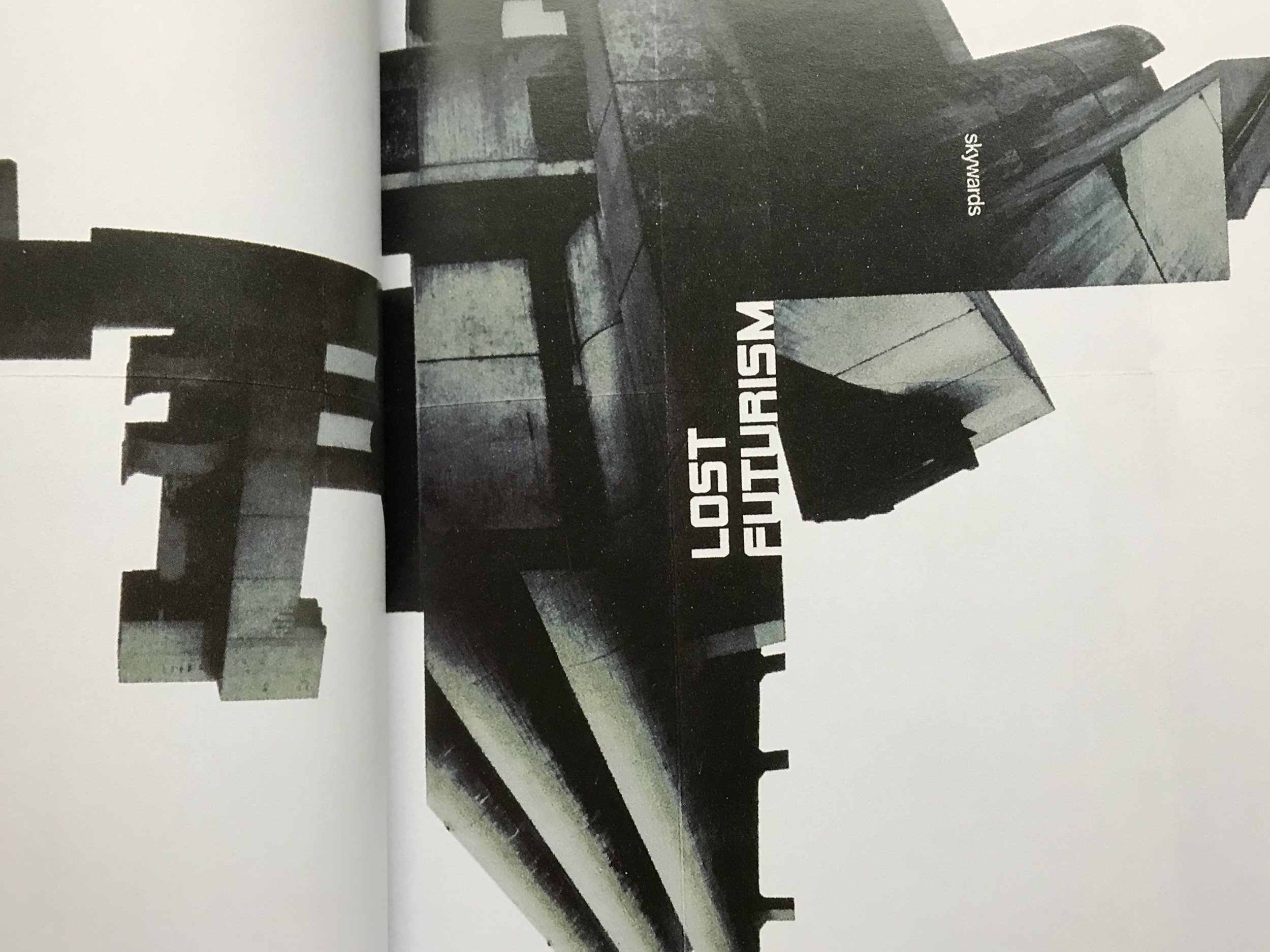
but there is another project of theirs that i would like to show you - i’m still hunting it, i believe it must have been self-published at the time. it is one titled lost futurism (according to the caption in GB: graphic britain, it is a book that was printed in 2001 - please do get in touch if you know anything about it.)
the project examines brutalist architectural heritage in a graphic design language - having mentioned portsmouth, this obviously means the tricorn centre, mostly, which i have never seen in real-life but somehow in this graphic interpretation, felt nostalgic and futuristic, alien at the same time. i used to stare at these pages for ages. it was really fun discovering about the building itself but also the graphic representation of it - it was just really, really cool and simple, and it spoke my language of taking a three dimensional form and reducing, or rather, deconstructing it to its image and basic form.
to this day i’m still obsessed with that sort of thing. i used to do a lot of my own experiments with my own photos of my favourite buildings when practicing my computer skills (a useful habit to get into) but it also transpired to other work and i firmly believe they have a place on textiles too. obviously, graphic design is different, it is visual communication, but if the result is decorative, then why should it not be used on textiles too?
so i hope you didn’t mind learning a little bit about this background behind the architecturally inspired textile patterns of zitozza. and if you know anything more about this work, if it exists on its own as a separate book, please, please do get in touch, i think i want a copy! thank you!
-
links:
GB: graphic britain - by patrick burgoyne, 2002 laurence king, london, uk (on worldcat.org)
still can’t quite comprehend how fast it’s been, but thank you so much for keeping up to date with us throughout our first full year. we have a lot of exciting things planned for 2022 and we hope you do too! until then, we wish you a very, very happy christmas and see you in an amazing new year!
good morning december, how did we get here again? i can’t quite believe how fast this month has gone again but with all the busy festive preparations, i hope there is a little time left for inspiring stories and interesting conversations - and i really did bring a good one for you this time, as i managed to get a few words in with matt maurer, designer of the smart and sustainable home office system of arnie.m, featured in our post about interior trends at the start of this year.
ZITA: hi matt! first things first, can you say a few words about yourself – what you do and how you got there?
MATT: i’m the founder and creative director of mr.m ideas studio. mr.m specialises in brand identity, visual communication, digital design and environments. with over 50 design awards and 20 years’ experience i collaborate with creative people in many fields to make great ideas happen.
my journey before arriving at mr.m was studying graphic design at university and spending my earlier professional career working for some of the most renowned design agencies in manchester.
ZITA: and about your product - would you say that developing arnie.m was a long-held dream of yours, or was it something that evolved over time? can you give a little insight into the birth of your business?
MATT: birth is the key word! my studio is based at our small home and when we found out my wife, angela was expecting we also knew that we were presented with a spatial challenge.
life and work need to be in balance especially within the home environment. the limited space presented a challenge but that is what led us to thinking about creating a workspace that could accommodate all my design paraphernalia, yet still be compact enough to shut up shop of a working day and become an attractive piece of domestic furniture.
so, with the help of friends and contacts in the creative and craft industries in and around manchester, we took our design ideas and skilfully translated them into a for-real form – a workspace.
we were swept away as new parents when arnie arrived but once we started to get our heads around everything including sleep deprivation, we began to see how the workspace really helped. when friends and family complimented on the complete ‘office’ it led us to start out on our adventure. it took just under two years of developing and tweaking to turn our workspace in what it is today — arnie.m. (we had to name it after the little man who inspired the idea!)
ZITA: how lovely - and impressive! i actually discovered your furniture in search of home office trends which obviously blew up since 2020 and the pandemic. how has this experience been so far for getting your range known?
MATT: we only truly launched arnie.m at the end of december / january 2021, we are very much still in our infancy. we want arnie.m to be a family adventure for angela, myself and arnie plus the amazing network of skilled people who are part of a wider, very support arnie.m family. i have to say we are still finding our feet but the response and support we have received has been amazing! the highlight for us has been getting arnie.m featured in variety of well-known/high end publications which has raised our profile.
ZITA: modular design systems in general are a smart way of working but there’s also a lot of play in it for your clients. can you expand a little bit about the possibilities or how your furniture can be built up? are there any limitations to your systems or can it be theoretically expanded to huge environments (e.g. contract?)
MATT: we know creating your perfect working environment is personal, so by making arnie.m modular makes it adaptable. arnie.m starts with a frame, and you basically hang the units that best meet your needs on the sturdy (yet elegantly formed) frame. currently arnie.m has a range of different modular units which include a desk unit to several storage and display unit options, this gives you the flexibility to create your very own arnie.m
each arnie.m is handcrafted with pride and attention to detail, we only make to order. this means with the support a small but talented collective we can customise and be creative with the modular design if required, individual unit designs, sizes, even colour can all be considered. this way of working gives arnie.m the flexibility to work in different ways and look at opportunities in different environments.
ZITA: that’s really clever! i think handmade processes always allow a lot of custom tweaks indeed. can you tell a little bit more about the material choice? how important are sustainable qualities for you with regards to both materials used and your working processes?
MATT: we are not, nor do we want to be a mass-producer, having to use cheaper materials like mdf. we love ply it’s basically a ‘green’ product, its beautiful, durable and long lasting. we designed arnie.m to be easily reconfigured to meet your needs over a lifetime, individual hand-made, built to last in natural birch plywood that is FSC certified.
arnie.m has some clearly defined ambitions which focus around sustainability. we want to grow arnie.m carefully for everyone’s benefit, as mentioned we are a family not a vast global corporation. we want to support our small collective. we use only what we need in materials and packaging, avoiding waste and keep production local. by building a sustainable business we want our boy arnie to benefit from the work he’s inspired.
ZITA: this is very inspiring! i love plywood in general, i even print with it - it’s so universal. and beautiful too. what were the aesthetic driving principles of your product? do you follow any particular design school or style, or was it purely driven by function?
MATT: function was at the heart of the idea. simply our brief was to create a practical, adaptable and functioning workspace within a small space, that could also be aesthetically pleasing.
ZITA: it makes perfect sense! and now a question i ask from everyone - can you recommend a book, or another designer, artist or a maker whose work is worth looking into?
MATT: angela was the really driving force for developing the workspace into arnie.m but we were inspired by the books produced by the do book co we highly recommend taking a look at them.
ZITA: i definitely will, thank you! and last, but not least, where can we see your products at the moment? and what next for arnie.m? are you looking to grow your range?
MATT: you can view arnie.m on our website but we also currently have one arnie.m displayed in a house by urban splash show home in new Islington in manchester.
next year we look to continue to build the arnie.m brand. we are also going to explore adding new units designs to our range. and most importantly enjoy the adventure!
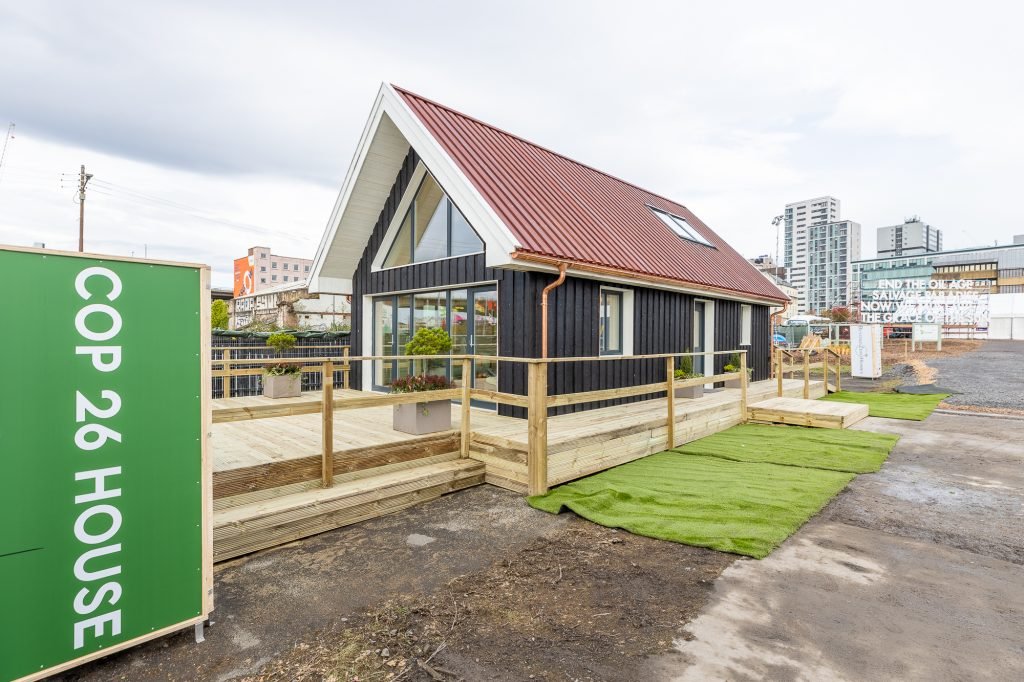
hello! first of all, apologies for not having posted anything for ages, zitozza have been very, very busy in the last few weeks with making stuff and taking them to events… but we haven’t yet shared the best news on the coolest (probably ever!) project - the COP26 housein glasgow. this is a sustainable model house built at the broomielaw for the COP26 climate conference and as an obsessive architecture and sustainability geek, i was eager to learn more about this and with a huge thanks to beyond zero homesi managed to put together a little bit about this.
the house itself is a project of many contributors, designed by peter smith of roderick james architects, developed bymembers of beyond zero homes - a collaboration between developers, architects, suppliers and industry bodies with the single aim to demonstrate how beautiful, affordable, healthy and comfortable homes can be developed with minimal impact on the environment, throughout their lifecycle.
photo by fourfifteen, with thanks to beyond zero homes
there’s an important thing to mention here before delving into the details here - i’d like to emphasise that this house isn’t some kind of futuristic concept, but designed for the present and built using materials and technologies that we have available today and it is very much a present imperative to use them across our building projects if we take our climate goals seriously. so what exactly are these materials and technologies and what makes a building sustainable?
according tothis assessment by daniel doran of circular ecology, the house is an exemplar of embodied carbon. most embodied carbon emissions come from the supply chain of construction products – the extraction of raw materials, processing, transporting and manufacturing and then there’s transporting products to site, installation, repair and replacement during use, and their end-of-life deconstruction and disposal. what makes the house actually carbon negative, beating RIBA’s own carbon target by large, is largely thanks to the material choice of locally grown timber. the uk is one of the largest timber importers in the world which is not only an unnecessary addition of shipping-related carbon, but growing them locally also supports reforestation and capturing carbon.
photo by fourfifteen, with thanks to beyond zero homes
the house is of course eco-conscious in using responsible heat sources and airtight insulation - it is using infrared heating which works by heating the house itself rather than the air in it, so it is much more efficient, comfortable, space saving, and perhaps the biggest benefit in a wet country such as scotland is reduced moisture. of course the insulation is achieved with triple glazing and even theinsulation and the cladding is using timber.
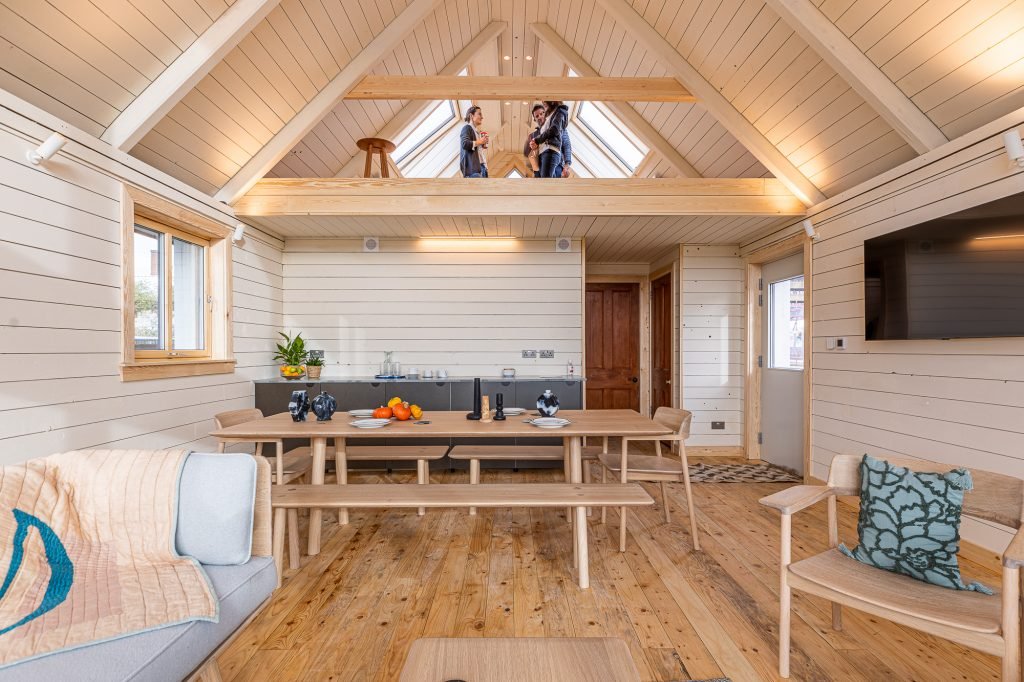
i’m not an expert on construction and structure, but it really amazes me how many places in the design uses timber even where we’re not that used to seeing it and it is also designed to dismantle easily - this will be demonstrated live after the conference, when the house will be disassembled and re-built in aviemore to join an affordable housing scheme of 12 of such houses. i’m going to be honest, i was a little bit sceptical about how much of these houses we can build efficiently in a city though - after all, timber is not known to be hugely scaleable, and in a climate-stable future, we want to spare as much land as possible, don’t we? however, talking aboutRIBA’s operational carbon targets, the architect peter smith said “for larger houses using this same build system, the target is significantly easier to achieve” which leaves me hoping it would work with multiple households too.
photo by fourfifteen, with thanks to beyond zero homes
last, but not least, we should talk a little bit about the decor - the house was styled by roddy clarke who made conscious decisions to continue the use of sustainable and natural materials inside with wood furniture and locally sourced soft furnishings - which is why i’m so proud and pleased to loan one of my jute rugs to the project. (while we cannot grow jute here locally, it is still one of the most sustainable textiles in the world in terms of carbon capture and water footprint.)
it really is a wonderful project and i hope that in the past few weeks, all the important people in the sector has visited and learnt from this model because we need to implement these practices right now if we want to keep our future liveable. it is easy to get into a negativity spiral about climate change, because we are undoubtedly on a depressing course and we are definitely going to feel the effects of our ignorance for a long time. however, it’s not true that we haven’t done anything or that we are unable to. we do have affordable solutions at hand with which we can limit some of this damage and we are able to use them. i do believe we are smart enough and projects such as this house makes me feel hopeful and positive for the future!
well, i hope you’ve had a lovely time visiting the scottish borders scouting for modernist icons by the wonderful peter womersley, because this is the very last stop! we arrived in the town of melrose, on the outskirts, in what seems to be a quiet, residential area, and are standing in front of the boiler house of the demolished hospital that used to be known as melrose district asylum. it is no longer there, except for the boiler house, designed by peter womersley.
built in 1977, it is another one of his award-winning works, for industrial architecure. it is a highly functional building and perhaps much more “brutalist” than the previous ones we visited so far, but it is really far from raw, in the sense that everything is finished to a great quality and the details are smart as always on his buildings.
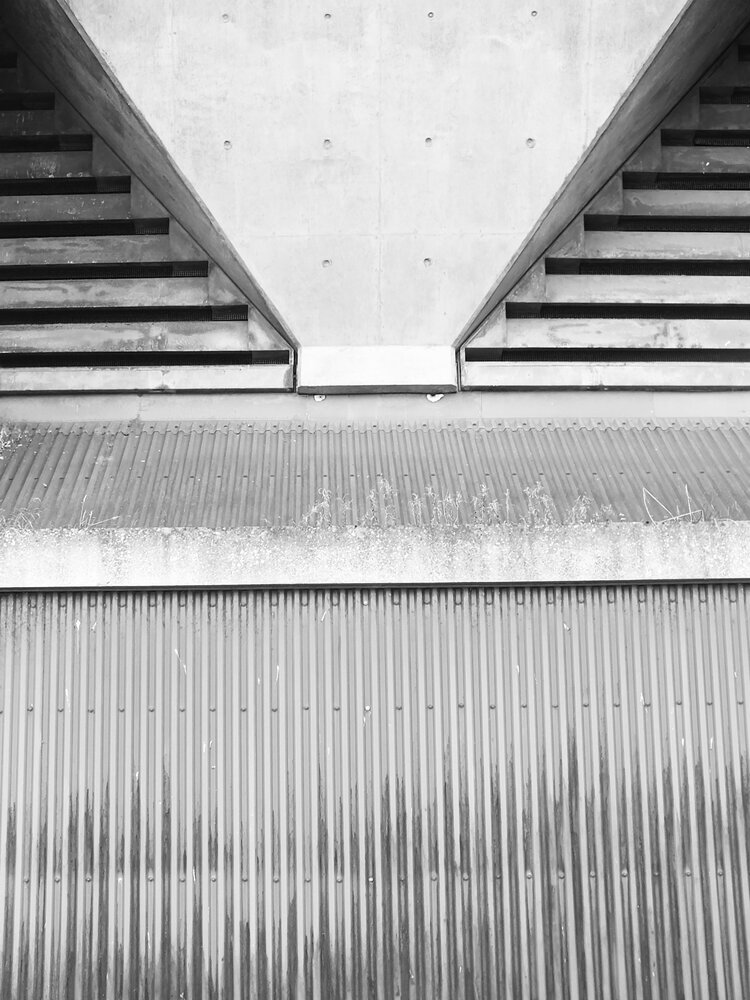
i’m aware that hospitals use a lot of steam not just for heating the buildings but for keeping things clean and sterile too, however i’m obviously not exactly familiar with the ins and outs of a boiler house, so i cannot write too much about what functions certain parts do. what i can certainly tell (as the most prominent feature of the side of the building) that there are three hoppers on its side, which were used to store the coal and they form a great rhythm of what i call these “upside down pyramids”, built into a wall of horizontal layers and it has inspired some great geometric patterns, so even if i don’t quite understand how it works, i still find a lot of joy in the aesthetic of the building.
aesthetic it is indeed. the concrete is smooth and not worked to timber patterns this time, but the almost minimalist surface is put together from narrow slabs, forming an even, soft pattern on the surface. the joins follow this pattern, somehow it’s so easy on the eye it’s almost a source of tranquility, which is a funny thing to say about a boiler house i guess.
a the time of visiting, it was not in a great state and the concrete was visibly aging. but we’ve left this our last station not just because it really was physically the last stop of the day, but also let’s finish on a positive note: this building’s fate is no longer hanging in the balance, it is being salvaged by being developed into flatsby studio DuB. the plans look amazing, contemporary and also preserving almost all forms (they’re even keeping the chimney!) and i hope it will work out in a residential function. it’s funny to see that something that was designed to sustain one particular function could be turned into something else so beautifully but i suppose it’s always possible if you work with what’s left behind by a genius.
i’m sad to say that even though there are many more buildings around in the uk (and even worldwide) by peter womersley, we’ve come to an end of our tour. i hope you’ve enjoyed it and we hope to join us on the next one - we might have to be taking a little break as we’re getting busy with all things festive, but we’ll find time to immerse ourselves in great architecture and will definitely be back!
we’re pleased to gather you around today, ladies and gentlemen, with a few more announcements to make. zitozza has been selected for the line-up of this year’s tea green festive market at the v&a dundee. zitozza will be there for one day only, on the sunday 7th november, but the event itself takes place on the whole weekend with a whole bunch of brilliant designers and i can hardly contain myself! it will be amazing to be exhibiting at this most prestigious venue and meet fans and makers of high quality contemporary design made in scotland. really cannot wait!
but before that, i’m going somewhere much more local, finally here in the east neuk of fife, at the bowhouse market (also thanks to tea green events) also on sunday only, on the 10th october. there will be three of these in total though, with weekends also in november and december, all with a fabulous line-up of scottish makers, music and all sorts of great stuff here which i love and as a fifer, close to the heart! (and oh my god, the food! THE FOOD!)
so we’ll be looking forward to meeting you all and showcase the latest hand block printed jute stuff to you - please think about christmas in advance to ease the pressure on the poor delivery folk! let’s make shopping an event, treat your home (and yourself) to some beautiful decor and at these fairs - shop local, discover an army of local creatives, and… did i mention the food?
happy autumn! we’re back to work, back to school, back to looking ahead and also back to talking to people so i’m really pleased to announce tha after a long hiatus, t the design conversation series is continuing with a new arist! ciara mcinnes is an architect and fine artist based in glasgow. i discovered her fabulous prints on instagram during lockdown when i was craving to see beautiful buildings - some of them are the exact same buildings i’m also fascinated by, such as the netherdale stadium of peter womersley – so i was really keen to know more about the background about these beautiful works.
ZITA: hello ciara! first things first - could you say a few words about yourself, what you do and how you got there?
CIARA: hi there, thank you so much for having me! i'm an architect and fine art printmaker based in the west end of glasgow. i work in the medium of lino print, combining traditional handprinting techniques with contemporary, urban subject matters. inspired by the city, street art and general urban chaos, my work typically documents lost landscapes, urban spaces and historic buildings.
ZITA: i can see your architectural background - it comes across beautifully on your urban prints. i’m always glad to find other people who also see the beauty too in the things that often get a bad press. could you share a little bit about what inspires you about these landscapes?
CIARA: for me, the built environment is so inspiring, constantly changing and evolving. i love to document the city in my work, taking tiny snapshots of a place in time, knowing that it will never look exactly the same again. the light will be different, the graffiti will change, it will eventually be lost for good and exist only in print.
in architecture, it has always been the case that the styles of the previous generation are undervalued because they are seen as dated but not yet historic. In glasgow, there has been a huge cull of brutalist architecture in recent decades, a style that is only now starting to gain recognition. i'm really drawn to document these buildings in particular because of they represent an important era in history, when architects and designers were tearing up the rule book.
ZITA: that’s fascinating. i do love that era too, and the ideas they represent! do you have a favourite place, a city or a building you go like regularly going back to? Or do you continuously look for something new?
CIARA: i am always on the lookout for somewhere new, i love to travel. at the start of 2020 i visited mexico city which was such a vibrant and energetic city. the architecture is so diverse from pre-hispanic to cutting edge contemporary and everything in between, it's somewhere I'd love to go back to.
ZITA: that must have been beautiful. you mentioned brutalism before, but is there a particular school of architecture or style you’re attracted to more than others?
CIARA: i'm a fan of minimalist, contemporary architecture. there's a few places really leading the field such as scandinavia and japan but it's not something we have really embraced in scotland yet. there's an architectural practice called SANAA who create some truly breathtaking work.
ZITA: thanks for the tip, i will make sure to check it out. so what is the next cityscape or building you’re turning into a print? can you tell anything about any work in progress?
CIARA: i'm currently working on pair of prints that explore the temple gasworks in the north of glasgow. the structures of the old gasholders are still in place and create these skeletal figures in the landscape which you can see for miles around. i'm going to be integrating some more natural imagery in the prints which is a new direction for my work so i’m excited to see the finished pieces.
ZITA: sounds really exciting, i’ll be looking forward to seeing the finished prints. i’m also interested in your technique. your prints are very photographic! how are you working them into your prints? can you explain a little bit about your process as well?
CIARA: i always start a print by creating a master pen drawing which i then trace using carbon paper onto the lino block. i will usually combine elements from several photos or images into a final composition, all with a little artistic license. i often make little tweaks at the carving stage too, with a lot of natural elements freehanded as I go. the prints evolve through the printing process so i never fully know what the print will look like until the very end.
ZITA: that is really interesting! and your colour scheme is very minimalist and together with your ukiyo-e inspired technique, it reminds me a bit Japanese influences. it is very consistent throughout your work and it works to a wonderful effect – could you tell more about this? do you have a process of deciding about the colours in your prints?
CIARA: japanese printmaking is certainly an inspiration, particularly the dedication to craftsmanship and technique. my colour palette is typically very tonal which allows me to focus on the form of the print, then I create focal points by picking out details in metallic. i typically mix my inks with extender to create a more translucent effect, i love how this gives the prints an almost watercolour like finish.
ZITA: it does! the results are really beautiful. and now the questions i ask from everyone - can you recommend a book or an artist or a maker whose work is worth looking into? something that keeps you going?
CIARA: i recently discovered an artist called claas gutsche who's based in berlin, a fellow lino cutter, his work is so precise and his technique is definitely something to aspire to. in a totally different direction i’ve always loved the work of a painter called maurice utrillo who was a contemporary of the impressionists but worked in quite a different style. he has a really fascinating story, using painting as a form of therapy. he painted the world around him, focusing on the built environment and often unloved corners of paris. i only recently found out that the kelvingrove museumholds one of his pieces but it's currently in remote storage.
ZITA: sounds like someone you would have loved to met! i will be definitely checking them out. and lastly but most importantly, where can we see your work next?
CIARA: well, i do have a few exhibitions on the horizon but sadly i’m sworn to silence until the official announcements! all i can say for now is that i have an upcoming show in a glasgow gallery this autumn, which will feature some specially created pieces. i'll also be popping up at a few art and design fairs across glasgow later this year, so keep your eyes peeled!
ZITA: very mysterious! i will keep an eye on your social media! thanks a lot for your time.
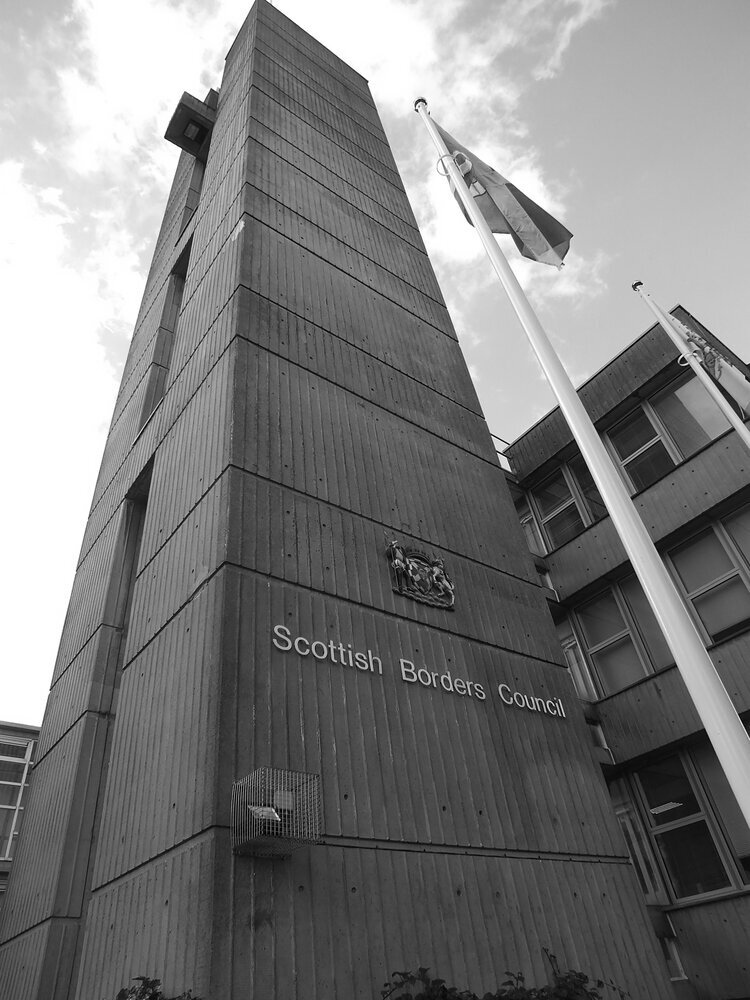
after our somewhat bittersweet stop last week, we’ve arrived to the penultimate station in our tour of peter womersley’s buildings in the scottish borders. we’re in newtown st boswells, where the council for the county of the scottish borders have their headquarters in a concrete and glass office building designed by peter womersley. we have of course seen wilderhaugh and we know what he’s like when it comes to designing office buldings but this one is a few scales up in size, and probably the largest building of our tour altogether.
that means there’s plenty of details to observe although it’s not possible to go completely around it due to the restricted access at the back. nonetheless it’s worth a visit, the building is a striking structure towering on an open green, embraced by its leafy surrounding of the village. built in the late 1960s, originally serving the much smaller administrative unit of the roxburgh county offices - today it employs approx 1000 people and has grown a post-modern extension on its side.
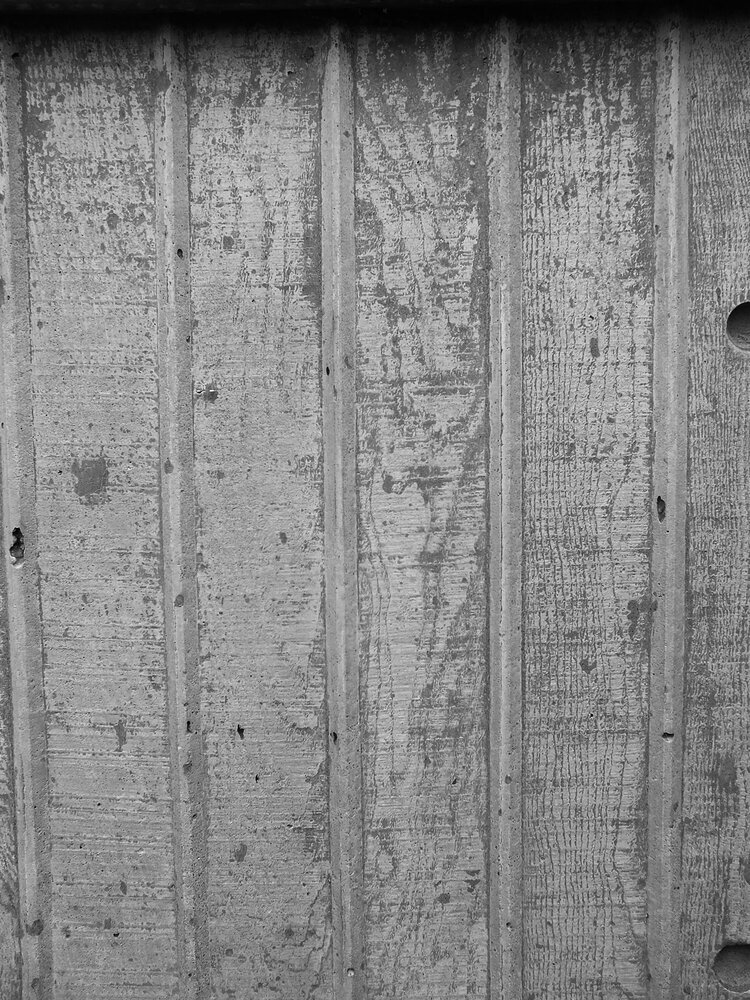
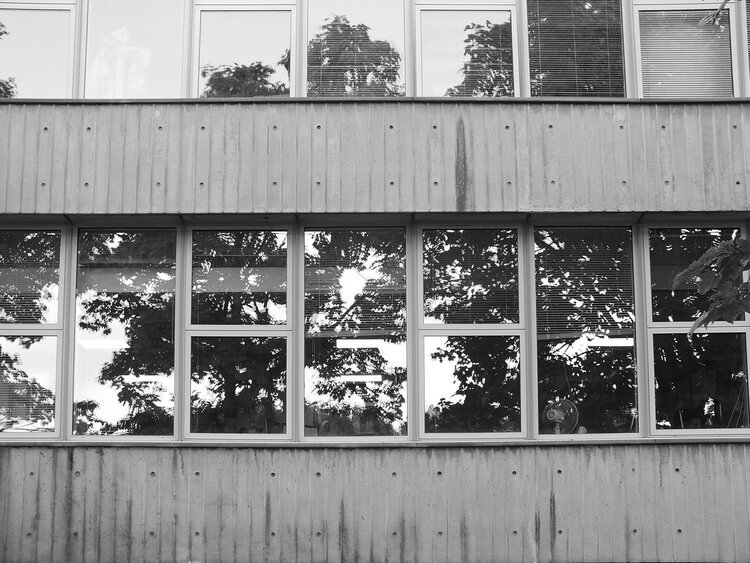
it’s not a brutalist design - the concrete is not raw but shaped with timber with the imprints visible on the facade. the clever use of glazing is also dominant throughout this building and there are a lot of intriguing details. its most striking feature is the service tower of course, cleverly connected to the main office buildings via elevated, glazed corridors with a garden underneath. this kind of biophilic thinking is found in modernist architecture a lot, and in peter womersley’s work too in church square too and elsewhere.
the building is not actually quite at how peter womersley imagined it. he won the competition to design it in 1961 but it was only completed in 1968 after some opposition by the locals. it’s still not really popular - however, even though the structure is cited as a reason, i suspect this could be also due to the amount of people who commute to the village by cars, and less at the fault of the architect. for sure, you can see that it’s dated in some aspects (like its contemporaries it probably is poorly insulated and things like wheelchair access are always haphazardly added to these buildings later.) nonetheless it was innovative and modern at the time, and the office space inside must be light with green views.
this building is the largest scale example of the genius of the fine details womersley could think of and i would have loved to see the what it would look like if it had been completed to his plans. the institution it serves has obviously grown and perhaps outgrowing both the original building and the village it’s in might not be good for its popularity, but i do hope that with time it is getting the appreciation it deserves.
so that’s it for now, i hope it’s not too boring yet to and you’re still excited about discovering the details of this brilliant architectural mind. if you do, then please stick around for last episode - we still have the boiler house of melrose district asylum to visit, so you can subscribe below to our newsletter in order to miss it… it comes a free print and the latest news from us, with pattern designs inspired by brilliant architecture. see you soon!
hello! we’re so sorry to have had to share the bad news with you on saturday, about the cancellation of our last jutefest event. i hope you haven’t travelled to dundee this weekend! if you haven’t heard, the very last jutefest was unfortunately cancelled due to staff having to isolate at the venue (scrapantics, our landlords have been utterly fantastic about this whole venture though so huge thanks to them!). and to be honest, for it only to happen to the last in a series of 4 is not a bad record, so we are celebrating our success and we are also thinking about how to come back with something bigger and better next year perhaps.
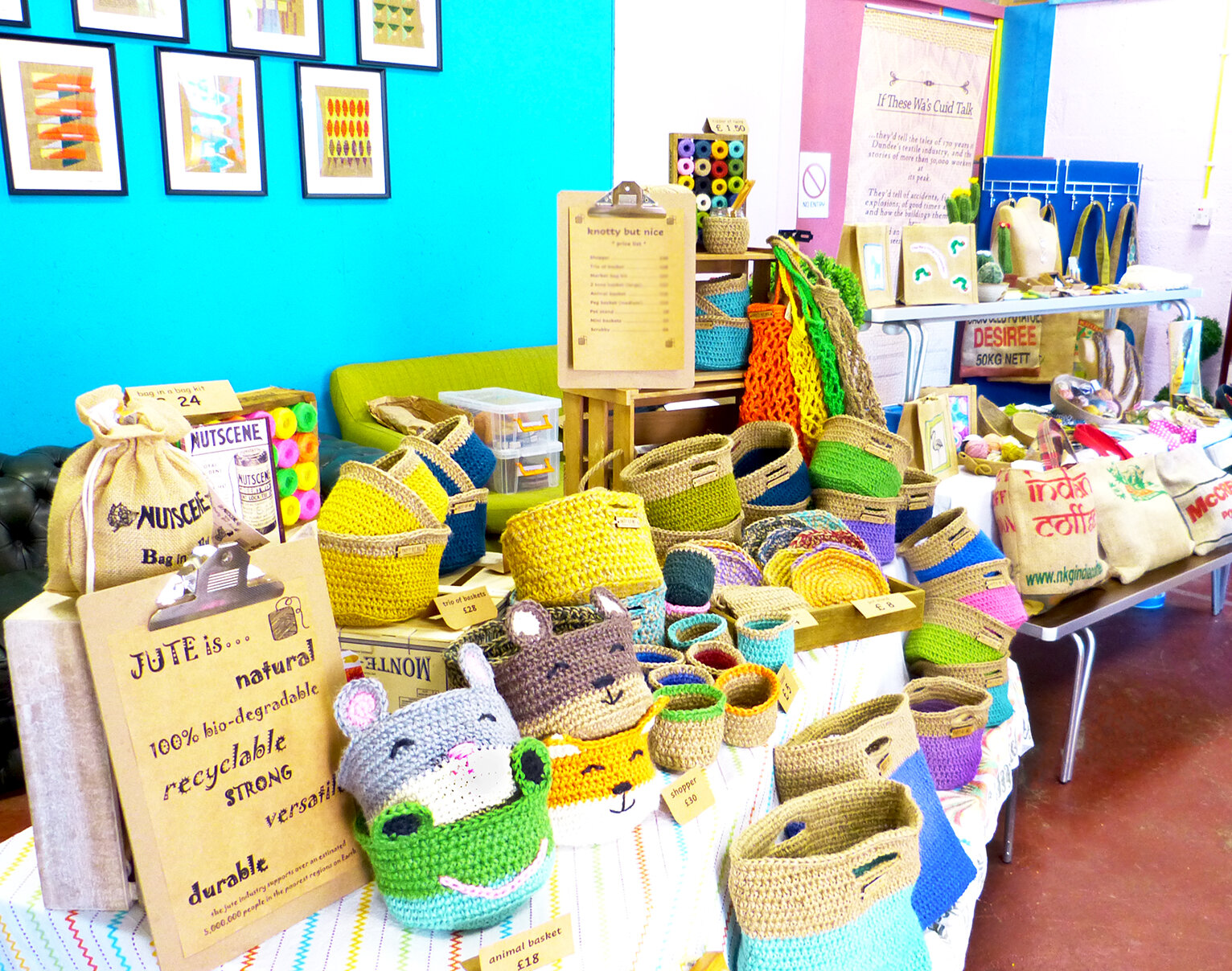
so if you only just heard of us, the best is yet to come. jutefest consists of three of us - jist jute,knotty but nice, and zitozza. because we all work with jute in different, but consistently modern and contemporary ways, we set out to bring the cloth back to its city and celebrate its sustainable qualities - and maybe showing the locals along the way why it’s cool again! while dundee has an enormous heritage to build on, jute is not a thing of the past but very much the future too.
photo by deborah chapman at artantics
photo by deborah chapman at artantics
we’ve done a lot of cool things together and it’s been an achievement in itself, i think, to pull this off on a shoestring with a few weeks notice. indeed there’s a lot of potential in our abilities to do something bigger and better soon! throughout the event series, alison has successfully managed to crowdfund a whole weaving loom and lessons to learn to weave - you can see the progress of all this on her instagram along with the first pieces. don’t they look fabulous? and maite was busy crocheting, unstoppably producing her work live at the fair whilst chatting to visitors about those durable bags! it was fascinating to witness that speed.
as for zitozza - of course, the embroidered wall-art collection also debuted at the jutefest and it did look good on the turqouise wall of the venue! and as a demonstration of our craft, two smaller lengths of fabric were printed live in front of enthusiastic visitors... i think one will become a lampshade, and the other a rug (see the pictures below!) and it’s coming very soon so watch this space and subscribe to the newsletter, to make sure you don’t miss out on any of our new plans (and the nice things made of these!)
save the date! it seems that as life is opening up more and more, we’re coming to pop-up at more events and markets - and this time, at a really prestigious boutique location at the newly opened st james quarter in edinburgh!
the pop-up event series lasts altogether for two weeks, from monday 23rd august until sunday 5th september, and is organised by the wonderful people at women’s business station to showcase some amazing makers from all across scotland and it takes place at sook, a pop-up boutique space at the shopping centre. zitozza will take up two days here, on wednesday and thursday 1st & 2nd september, sharing the space with a few other brilliant makers.
no doubt more posts are coming - and do keep an eye on our social media, but i just wanted to let you all know that this date is also coming! keep safe!
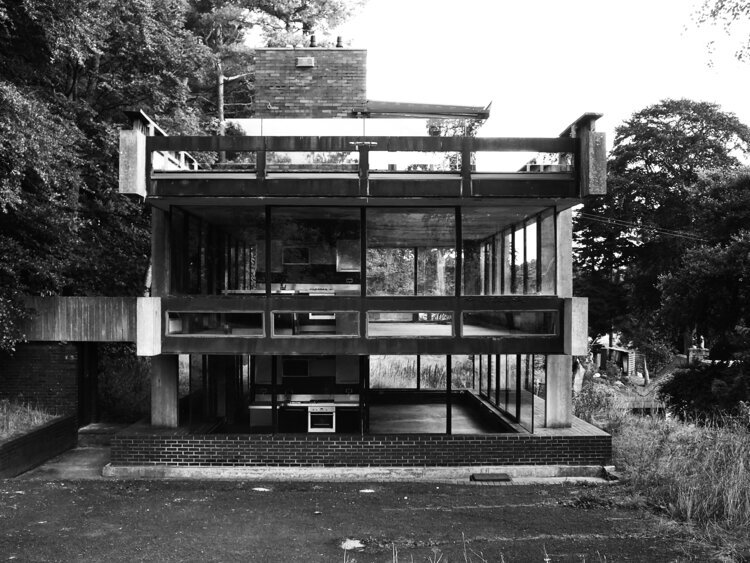
aaaand we’re here! it’s only the 4th station of our tour of peter womersley’s buildings in the scottish borders, but arguably the most iconic one! we are visiting bernat klein’s old studio and house, near selkirk. it’s a famous, grade A listed and most revered building, yet in its fate still hangs in the balance as it has been neglected in a poor state since the 2000s and the more time passes, the more expensive it gets to restore it to its former glory.
the studio was built in 1972 for textile designer and personal friend of womersley’s, bernat klein (whose work is probably also worth its own blog post later) and it won a RIBA award in the following year. it is a separate building form the family house, high sunderland, which is a modernist masterpiece in itself (built earlier, in 1957), and it is still a private residence so this post is focusing on the studio, which has been abandoned since 2000s. so before we dive in, i’m going to do an unusual thing and this time, and i don’t really recommend to visit in its current state, or at least not to go too close to it. these photos are from 2016, and since then, i’m not sure how dangerous it has become to go close to - i know it’s tempting but i would strongly discourage you to do so. i didn’t either to be honest, most of the close-up work was done by my camera, and i hope it did a good job regardless and you’re able to see why this work is so masterful and why it needs to be preserved.
there are many details and elements that tell you just how much thought the architect put into the building. before i visited it, as a student at university, i attended a guest lecture by historic environment scotland about peter womersley, his life and his work and there was a good few minutes dedicated to an enthusiastic review of this building. a vivid description that got stuck with me was about the flashes of colours one would see through the amazing, huge, frameless glazing - that’s bernat klein using this amazing studio space to make amazing art. their friendship is a great symbol to me that textiles and architecture are really connected areas that can constantly inspire each-other which is really the whole reason of this blog.
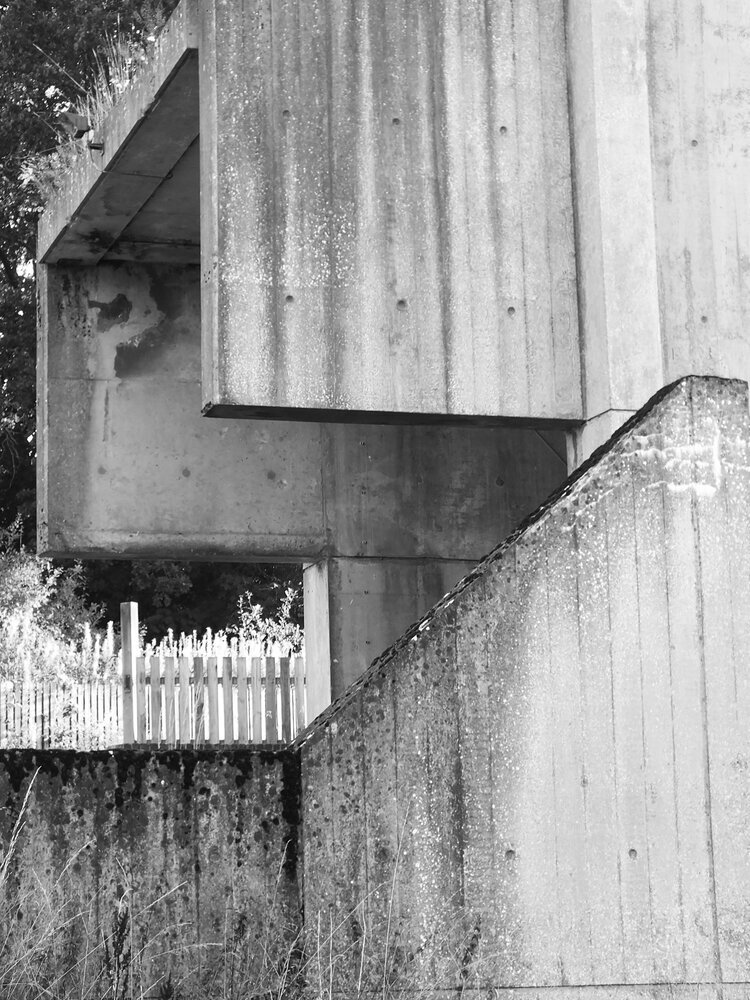
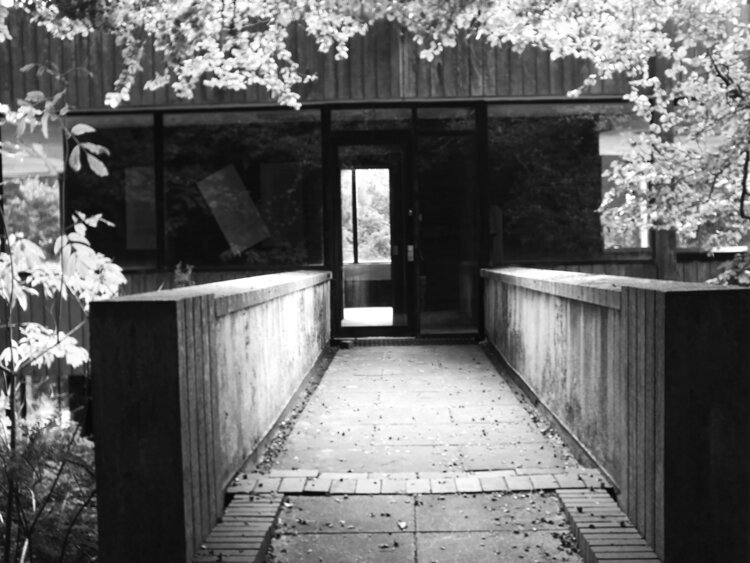
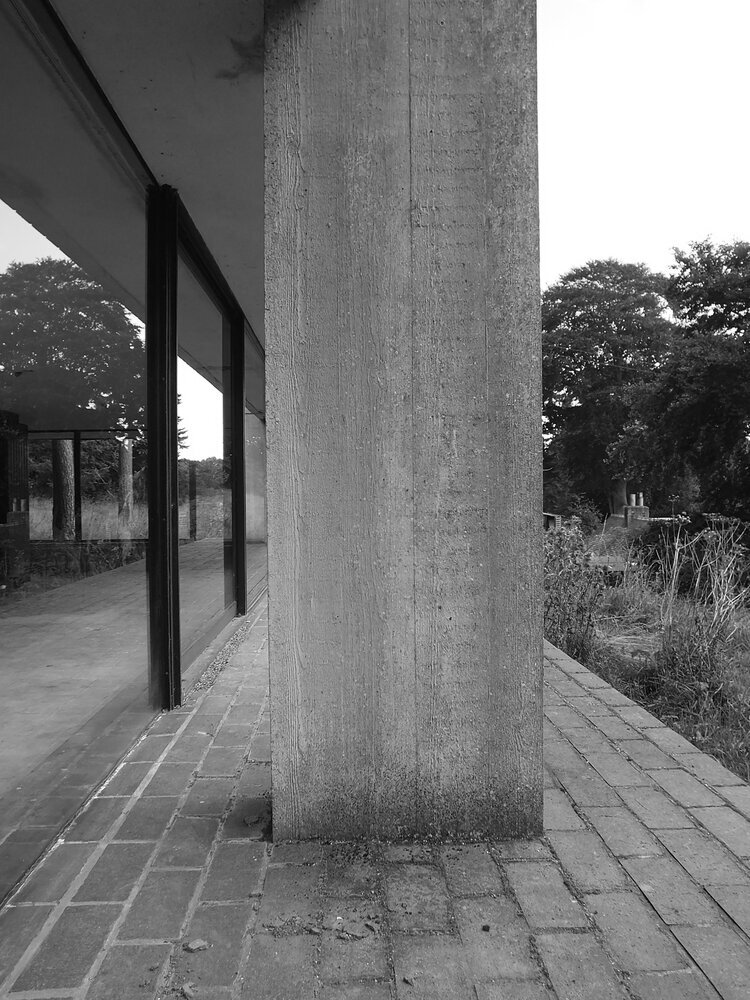
my images are black and white so i’m not sure how much it comes through that it’s surrounded with leafy, lush greenery, with stairs leading up to a bridge to access the cantilevered second floor (he was such a master of gravity - see also his beautiful work of the netherdale roof.) i’m trying to show you on these images the imprint on the concrete - i heard that peter womersley would be mortified to be called brutalist today, and indeed, the concrete is not raw at all here but very much takes the shape of the timber it was formed with, adding an extra tactility to the structure.
so we hope you enjoyed this visit - i hope we can go back when it’s fully restored and the building is put to a great use. if you want to help the cause to preserve this studio, i recommend you check out and get in touch with preserving womersley, a group of dedicated enthusiasts whose aim is to keep the work of this genius architect standing.
if you enjoyed this, do stick around as we’ll stop at two more places at this tour - we’ll visit a the impressive scottish borders council in newton st boswells, and the boiler house of melrose district asylum. you can also subscribe to our newsletter to our forms below (you can get a free print with it) and the latest news about prints inspired by brilliant architecture. see you soon!
***2025 update - this building is going up for auction on 30th july 2025. read our blog post for our vision of its future as a textile studio.***
further update: you can actually donate to bring it back to life, open to the public as a design centre - the bernat klein foundation along with the national trust and the scottish historic buldings trust have joined together in a bid to raise funds to acquire it and you can contribute to the cause.
i hope you’re having a happy summer people, i know it’s not easy to navigate between wanting a sense of normality and being cautious about the spread of the virus, but as we are getting through it all, we are very happy to announce that you’ll be able to meet us again, in real life, at CLOTH#21 in edinburgh, scotland, at the beautiful venue of the dovecot studios.
this will take place on two weekends, and zitozza will be there at the second one, on the 21st and 22nd august, from 10am till 5pm. it’s an honour to be standing amongst many other talented makers and textile designers - so please do come as it will be definitely worth it. not only it’s going to be full of stalls with beautiful stuff but the venue itself is one of the best in scotland, and perhaps one of the only ones catering for tapestries and textile arts at such a level.
and also please don’t forget that on the 7th august, the penultimate jutefest will also be on in dundee (at unit 2, anchor mills, west hendersons wynd from 10am till 4pm) man it feels good to be blogging about physical events and i hope it can continue! see you soon!
that’s another month gone - i can’t quite believe it but here we are, so it’s time to continue our photo blog series looking at peter womersley’s buildings. we are halfway through the series and this is the last time we are in galashiels. it’s a small post as well, of a small building, but nonetheless worth a visit. we are looking at wilderhaugh, the former sanderson & murray offices, built in 1961, originally for one of the many companies that kept the scottish wool and leather industry going at the time. they closed in 1980 and the building is now occupied by cameron associates who are, of course, architects, because of course architects would find home in this building.
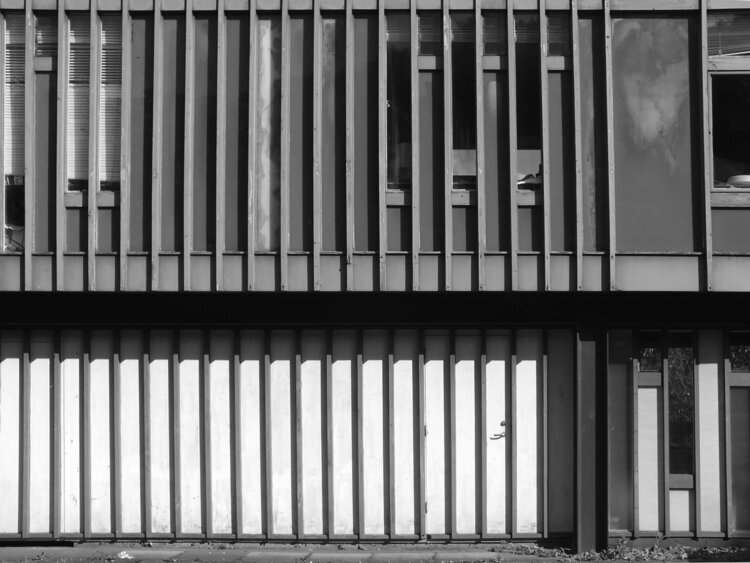
this building is really, really cool, in the literal sense of the word too: it’s playful facade is made of shades of blue and grey, but it’s softened by the greenery around. it’s quite small and human scaled but does not want to disappear into the landscape, it’s just there with its defined vertical lines, arranged into a calming, neat rhythm. visited it during an early autumn day and it was quite striking how the facade cast its own shadow on itself. but this image by its current occupants shows it lit up in the late afternoon against the darkness of the scottish winter. light is divided into aesthetically pleasing, narrow sections against the backdrop of the hills. what else can you ask for, really?
with this part, we are leaving galashiels and are ready to visit the bernat klein studio - make sure not to miss it! if you want to stay tuned for news about our architecture inspired collections of rugs, lampshades, cushions and wall-art, subscribe to our newsletter here!